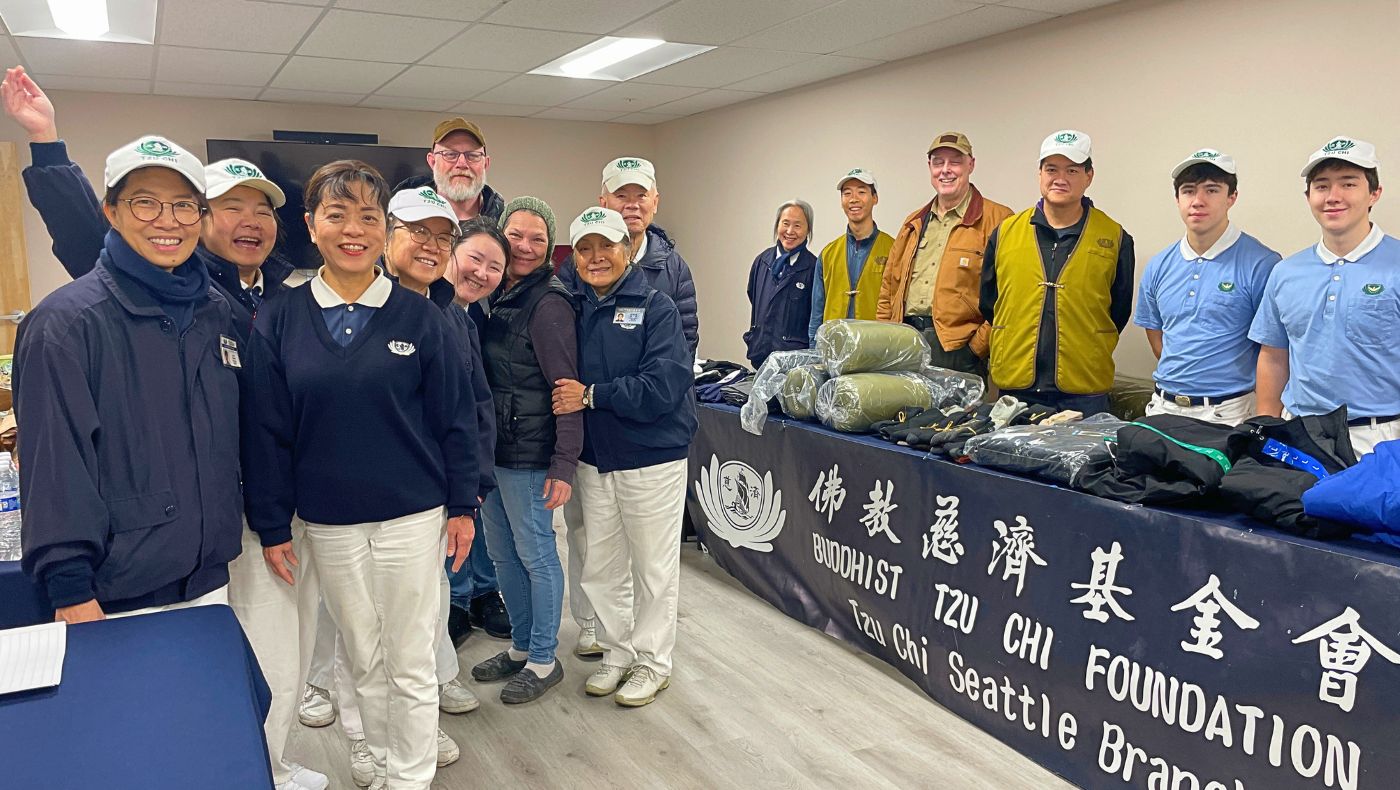
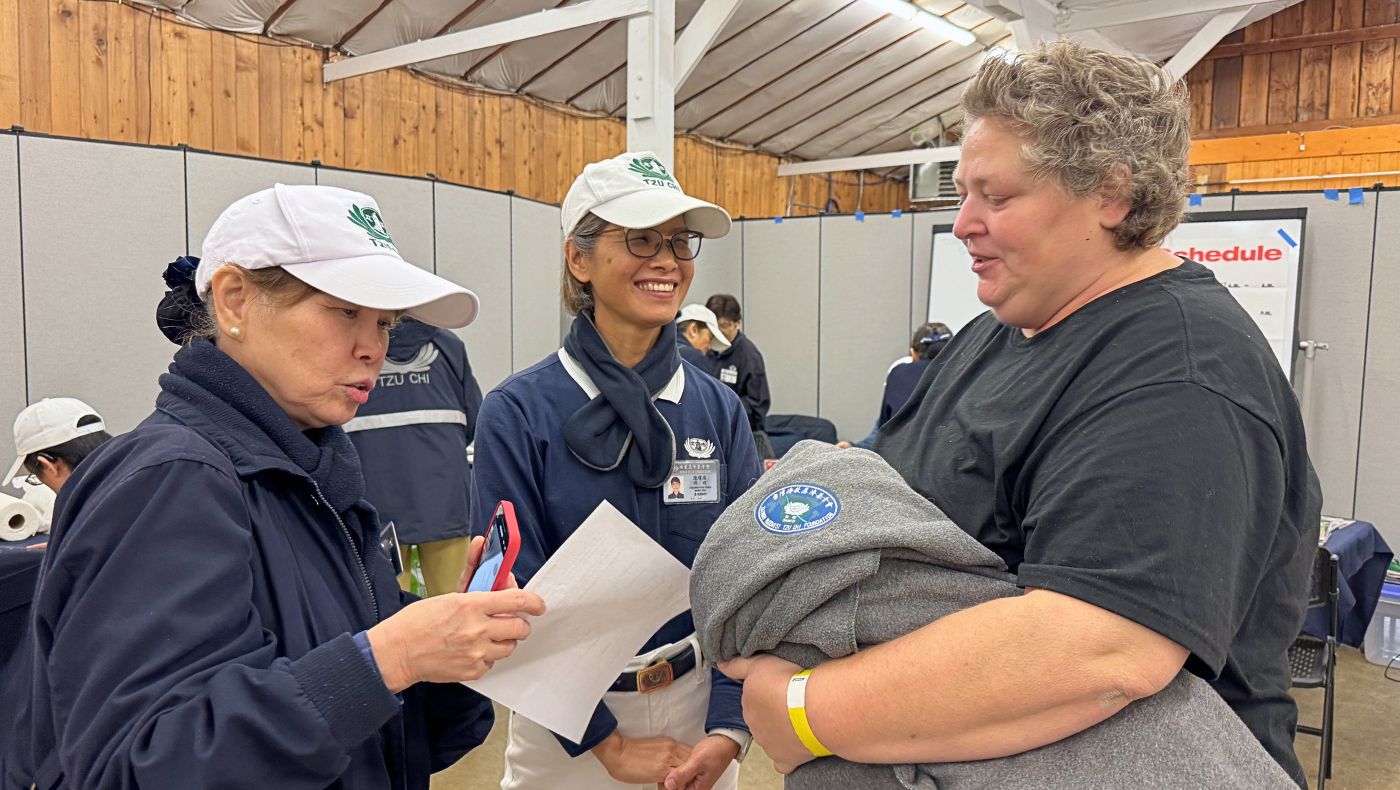
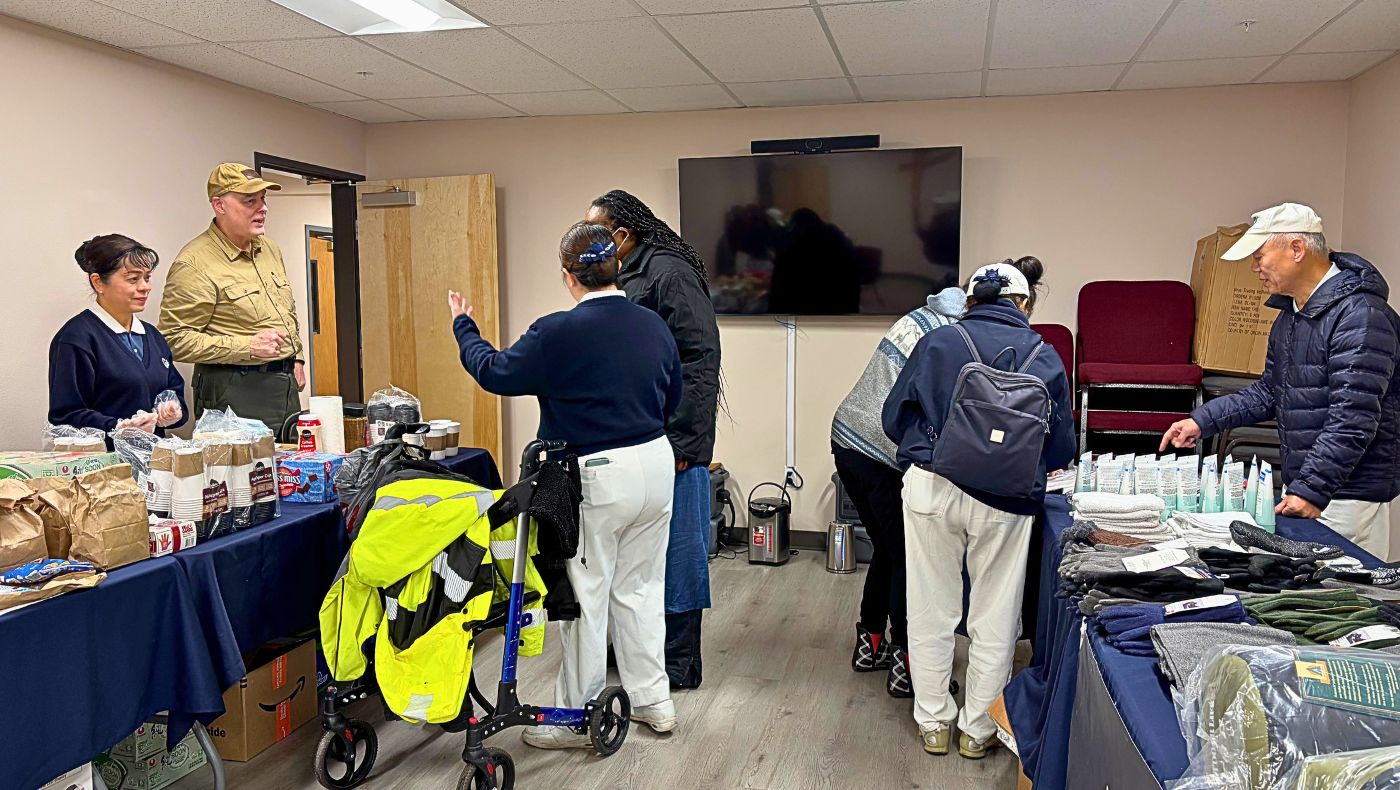
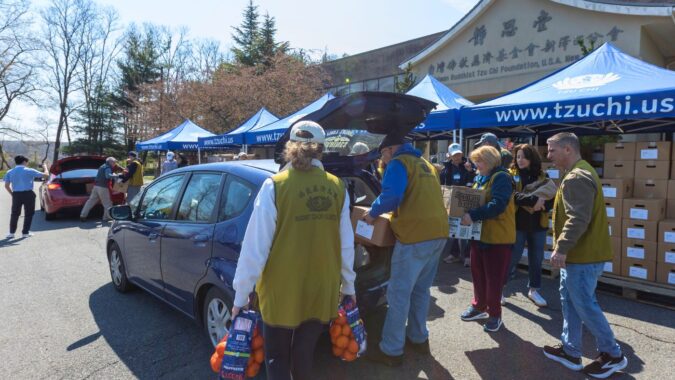
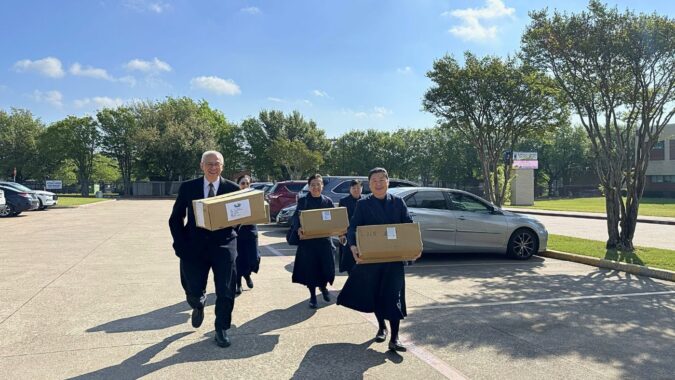
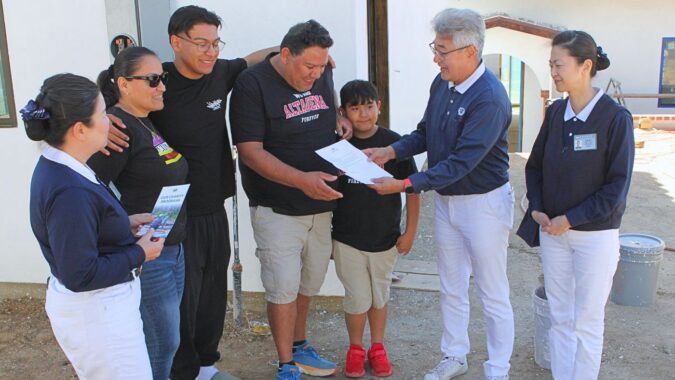
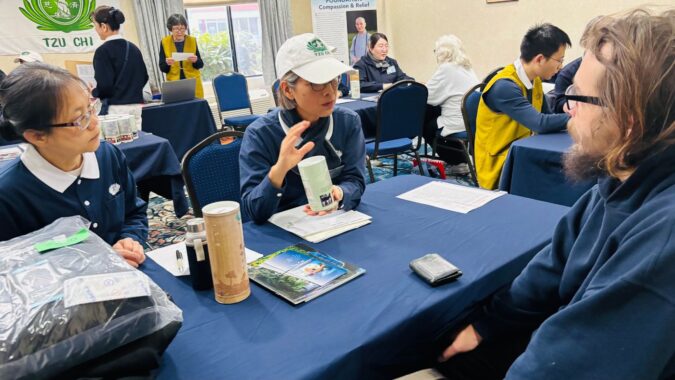
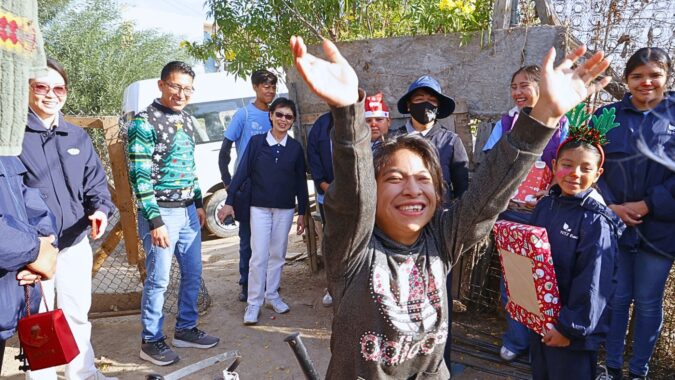
During their disaster relief mission responding to the December 2025 flooding in Washington State, Tzu Chi USA Northwest Region’s Seattle Branch volunteers await flood survivors after preparing emergency supplies for distribution in Mount Vernon on December 21. Photo/Tzu Chi USA Seattle Branch
Written by Ida Eva Zielinska
Near the end of 2025, a powerful atmospheric river and winter storm pattern began affecting Washington State on December 2, bringing extreme rainfall that quickly escalated into major flooding, landslides, and widespread road impacts across the state’s western regions. By the time Washington State Governor Bob Ferguson signed an emergency proclamation on December 10, declaring an emergency statewide, many residents were already in crisis mode, watching rivers surge toward historic levels, responding to “leave now” evacuation warnings, and relying on rescue crews as communities scrambled for higher ground.
On December 12, President Donald Trump approved an emergency declaration, authorizing support from the Federal Emergency Management Agency as communities shifted from immediate danger toward recovery. On December 12, President Donald Trump approved an emergency declaration, authorizing Federal Emergency Management Agency support as communities shifted from immediate danger toward recovery. By then, Tzu Chi USA Northwest Region’s Seattle Branch volunteers were already mobilizing to assess needs and bring relief to affected residents as quickly as possible.
Tzu Chi Launches Disaster Relief Efforts Swiftly
After an emergency relief coordination meeting on December 11, 2025, Tzu Chi Seattle volunteers got to work right away. In collaboration with partners including Washington Voluntary Organizations Active in Disaster, the American Red Cross, the United Methodist Committee on Relief, and The Salvation Army, their first plan of action was to begin damage assessments, support shelter operations, and distribute emergency supplies and Tzu Chi eco-blankets, while laying the groundwork for cash card distributions.
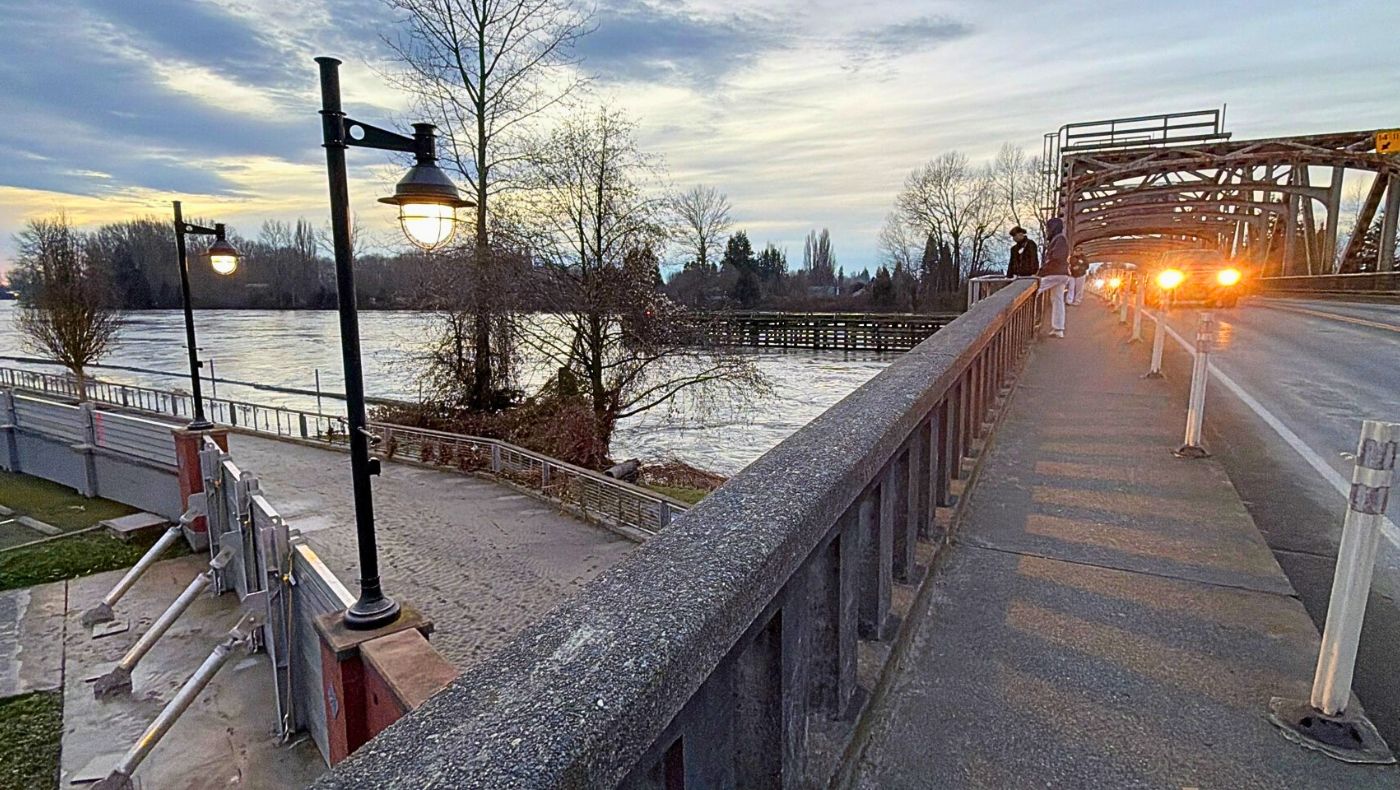
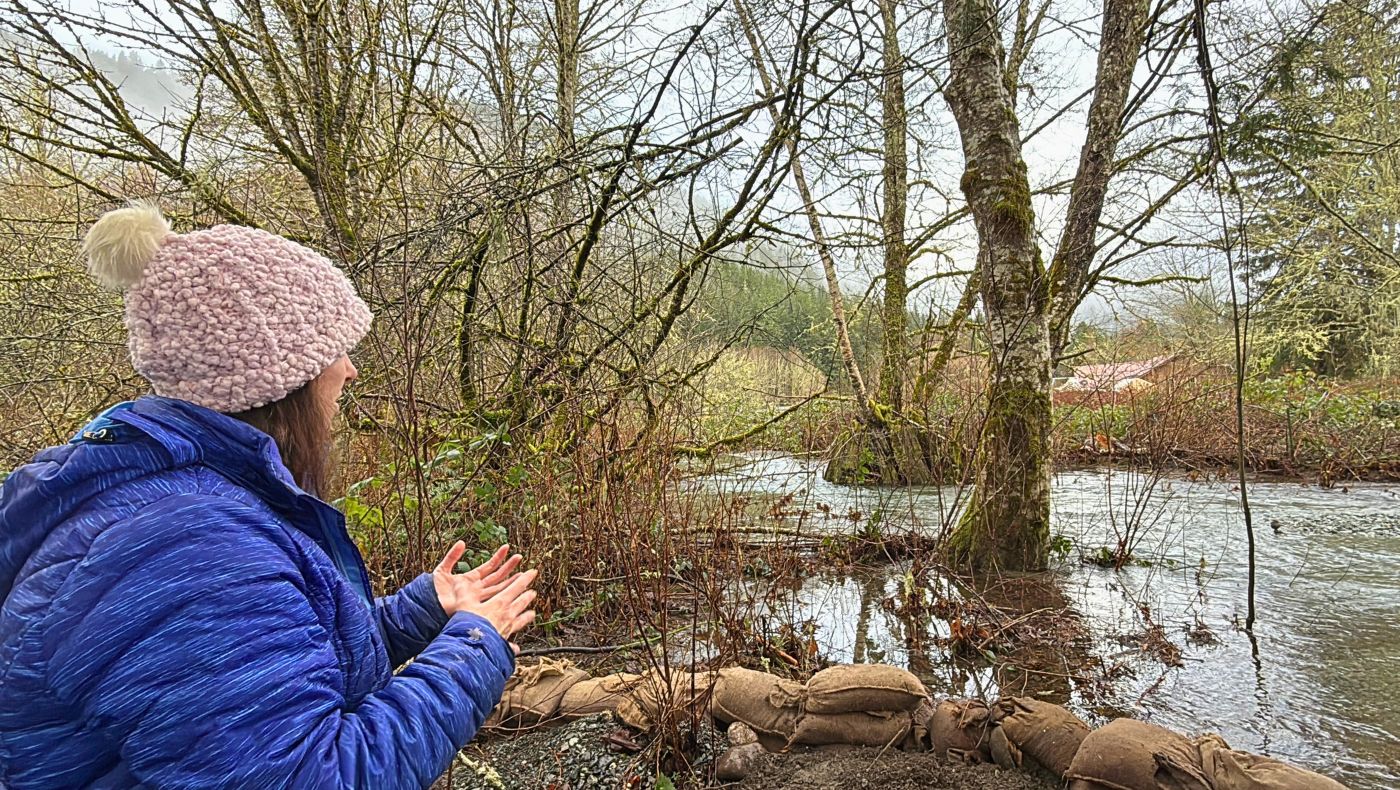
Tzu Chi Seattle volunteers document high water conditions along the Skagit River in Mount Vernon, where flood barriers helped protect the riverfront as water levels rose during the December 2025 flooding. Photos/Tzu Chi USA Seattle Branch
Early on, the most important thing was “letting people who need help know we are here,” the volunteers said. Between December 12 and 13, the team shared an information flyer with a QR code that allowed flood-affected residents to register for assistance online. They also recruited additional volunteers through social media and sent real-time updates to keep new volunteers connected and ready to support. Sharing information online also prompted some community members to join the effort on their own.
By December 15, Tzu Chi Seattle volunteers were on the road, beginning their first round of field assessments in Mount Vernon in Skagit County, 62 miles north of Seattle. Earlier in the flooding event, the Skagit River reached a record 37.4 feet at the Mount Vernon gauge, underscoring the severity of conditions in the river corridor. They documented water levels and conditions and, to build a clearer picture of urgent needs before shelter visits across the broader flood region, stopped by a local fire station and an American Red Cross aid registration site.
Shelter Visits Help Clarify Immediate Needs
On December 16, the volunteers split into two teams and traveled to several hard-hit areas across Snohomish and King counties. Their goal was to visit shelters where the flood evacuees were staying and assess immediate needs.
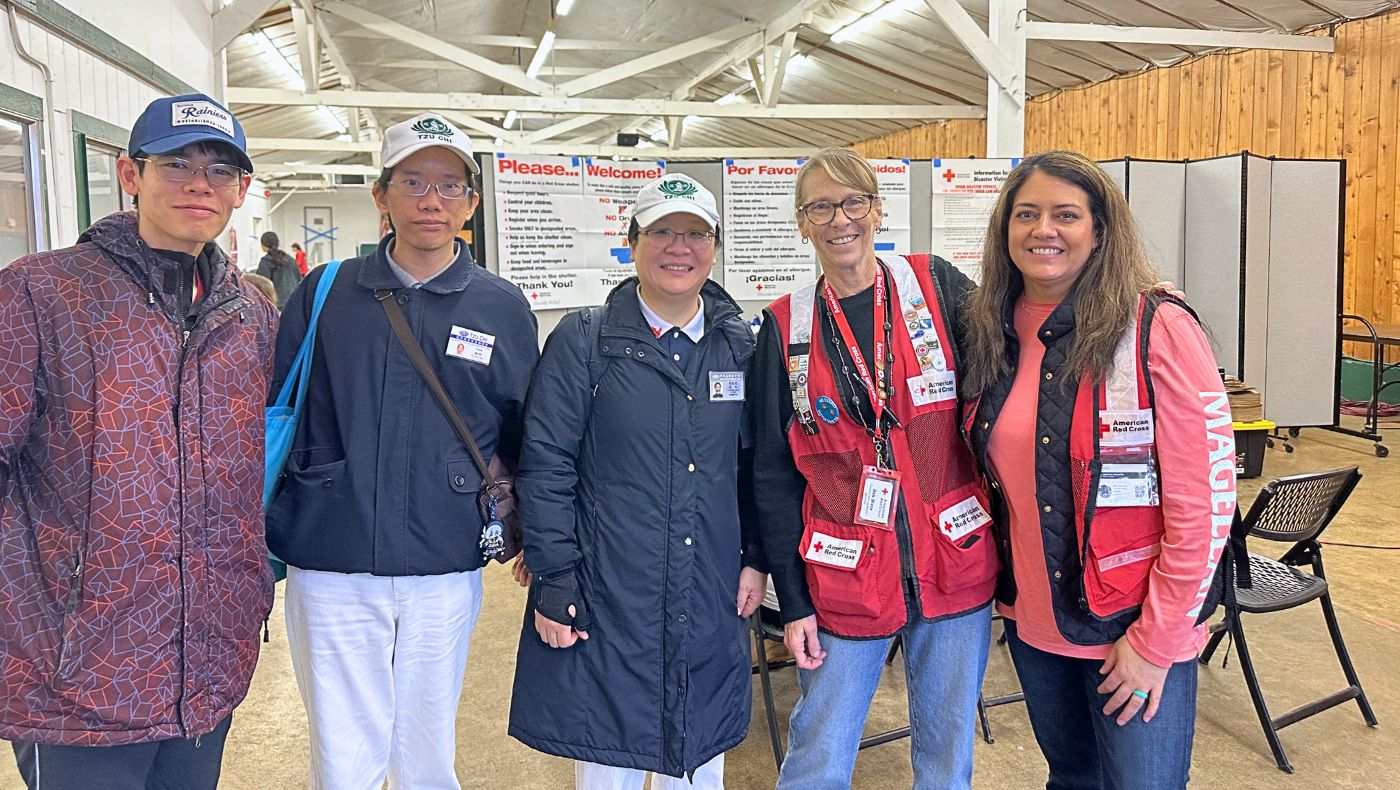
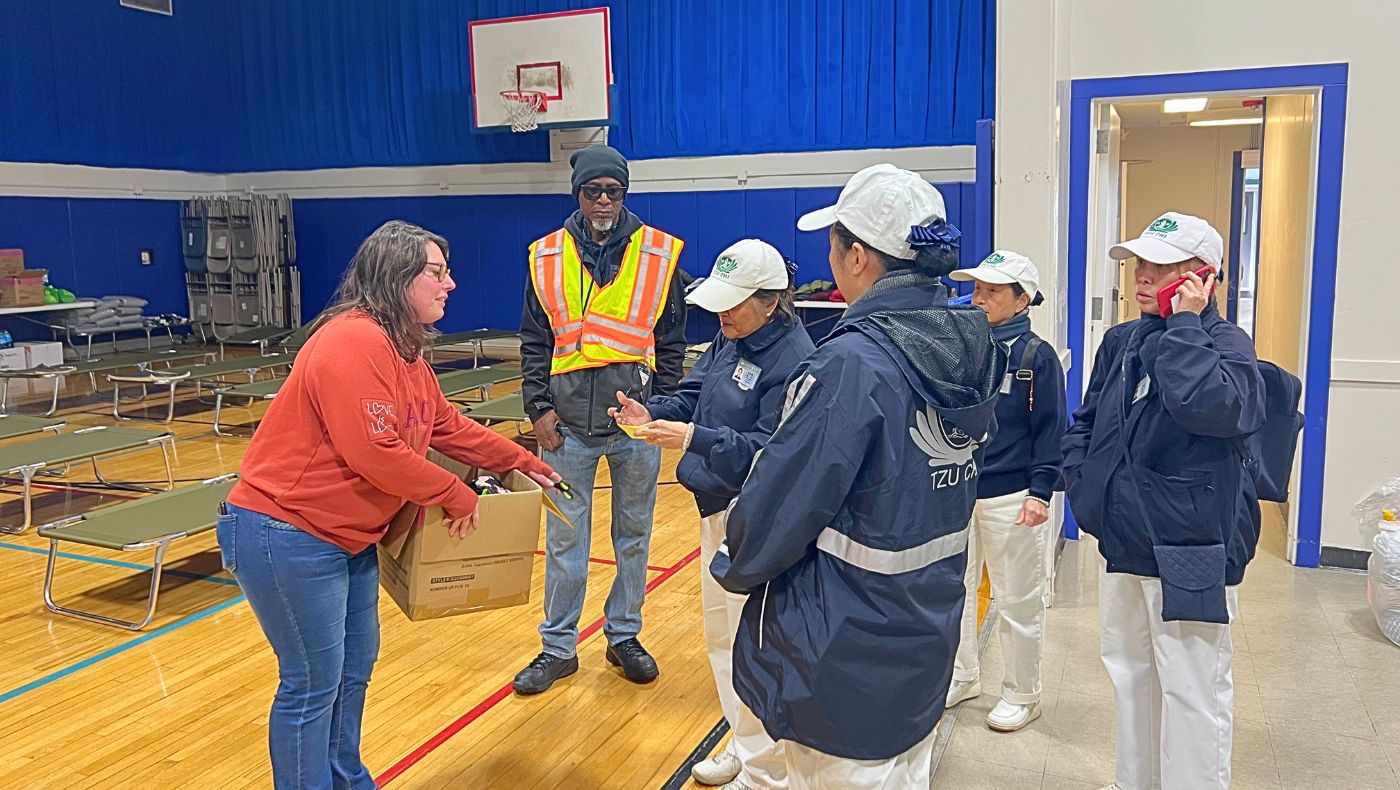
One group stopped at an American Red Cross (ARC) shelter at Evergreen State Fair Park in Monroe, Snohomish County, and also visited a local fire station. At the shelter, ARC volunteers shared that several families had children with special needs, including autism and ADHD, and needed extra attention and care. The Tzu Chi team observed how the unfamiliar surroundings made the children anxious and restless. Shelter staff also noted that some children had difficulty keeping their areas clean. Additional volunteers could help by accompanying them and keeping shared shelter spaces tidy and organized. In response, the Tzu Chi team planned to return to offer support.
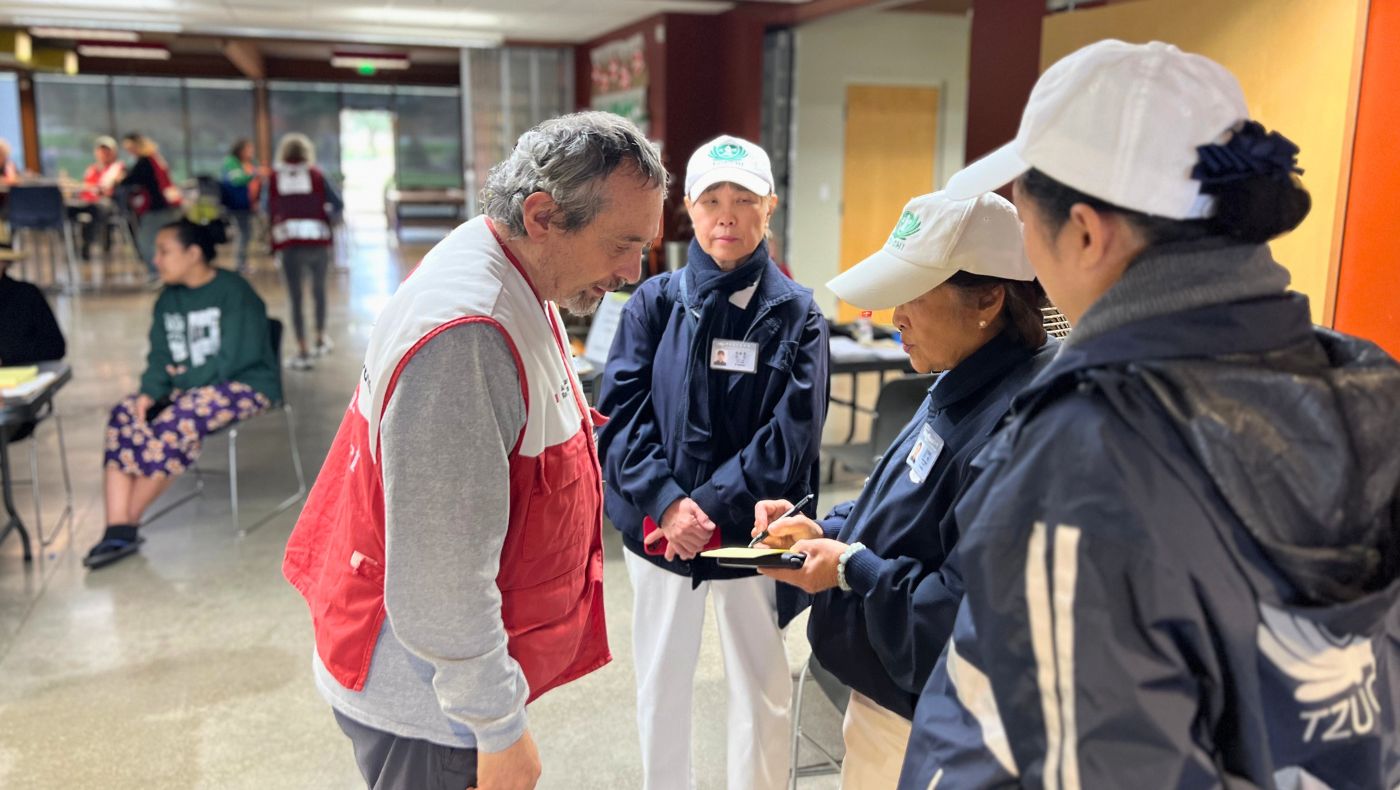
Tzu Chi Seattle volunteers meet with American Red Cross staff at the shelter in Monroe on December 16, 2025, gathering information on urgent needs, including added support for children with special needs. Photo/Tzu Chi USA Seattle Branch
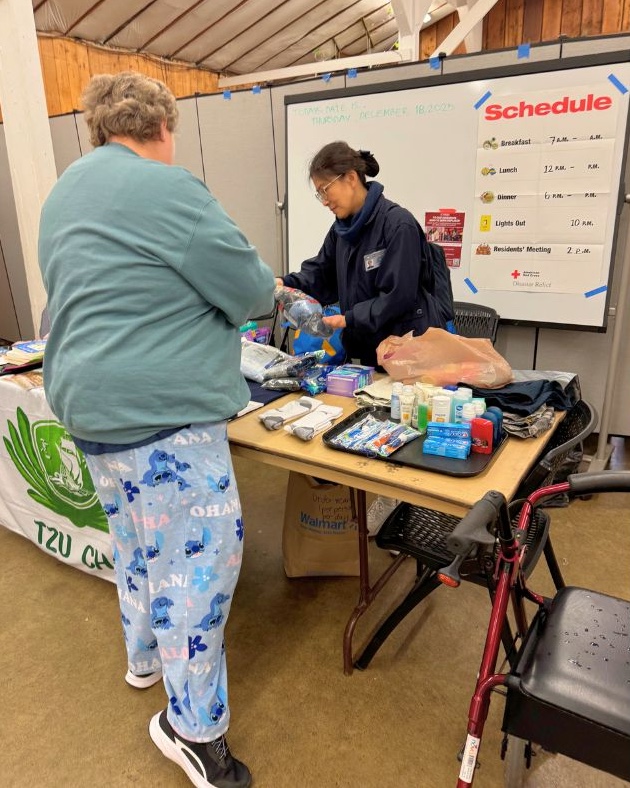
The second team visited two community shelter sites in King County, one at the Pacific Community Center in Pacific and the other at the Auburn Community and Event Center in Auburn. There, Tzu Chi volunteers identified immediate gaps and set out to buy and provide essentials, including slippers, towels, and cleaning supplies to help keep shelter operations running smoothly, including a newly added mobile shower unit.
It’s very moving that someone came specifically to check on us!
Tzu Chi Seattle volunteers take note of needs at the shelters they visit on December 16, 2025. Photos/Tzu Chi USA Seattle Branch
Mobile Outreach and Child-Focused Shelter Care
On December 18, Tzu Chi Seattle volunteers continued assessing needs and adapting to changing conditions. They also expanded relief efforts across shelters and field outreach while preparing to distribute Tzu Chi eco-blankets in the days ahead, provided in reusable eco-bags that could be helpful for people navigating displacement.
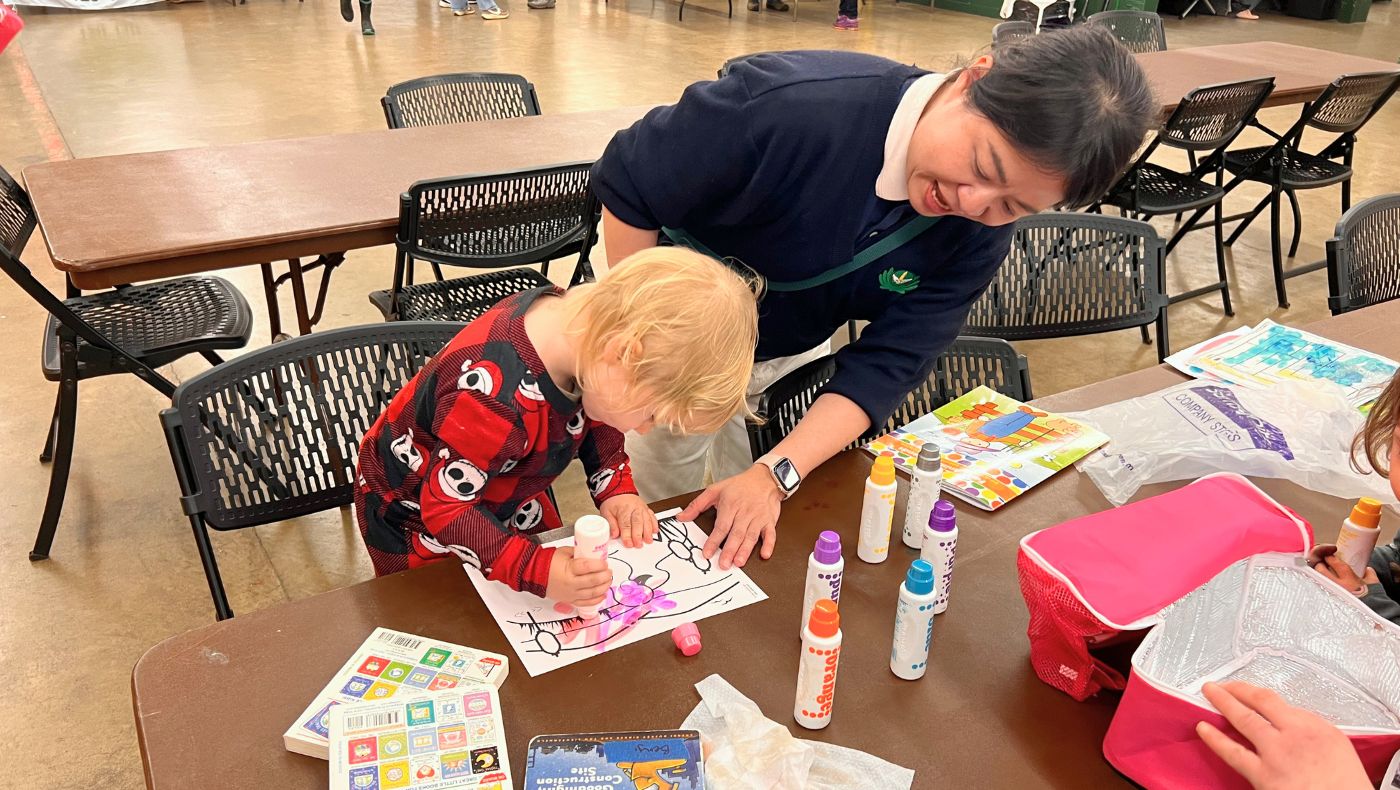
One team returned to the American Red Cross shelter site at Evergreen State Fair Park in Monroe to provide companionship, care, and follow-up assessments. They also brought art supplies, coloring pages, and simple games to engage the children staying there, including some with special needs who were struggling to adapt to the unfamiliar environment. This child-focused support marked the early mobilization of Tzu Chi’s Da Ai Children’s Care Team (Da Ai means “great love” in Chinese), and the team planned to bring more volunteers in the following days to continue these activities. The visit also created opportunities to provide on-site intake and online registration support.
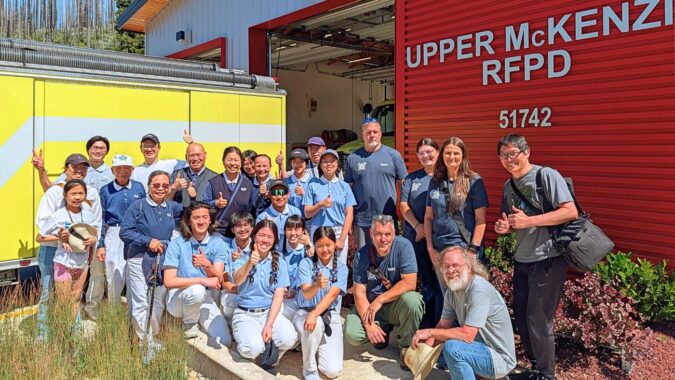
Tzu Chi USA’s Fresno Mobile Clinic team, including Steven Voon, Executive Director of Mobile Clinics (back row, second right), and Olivia Chung, Fresno Mobile Clinic Manager (back row, right), offers its full support to the iCare 510 initiative. Photo/Jennifer Thai
Steven Voon, Executive Director of Tzu Chi Mobile Clinics, routinely travels three hours from Fresno to Oakland to provide training and support for Tzu Chi USA Oakland Service Center volunteers. Photo/Jennifer Thai
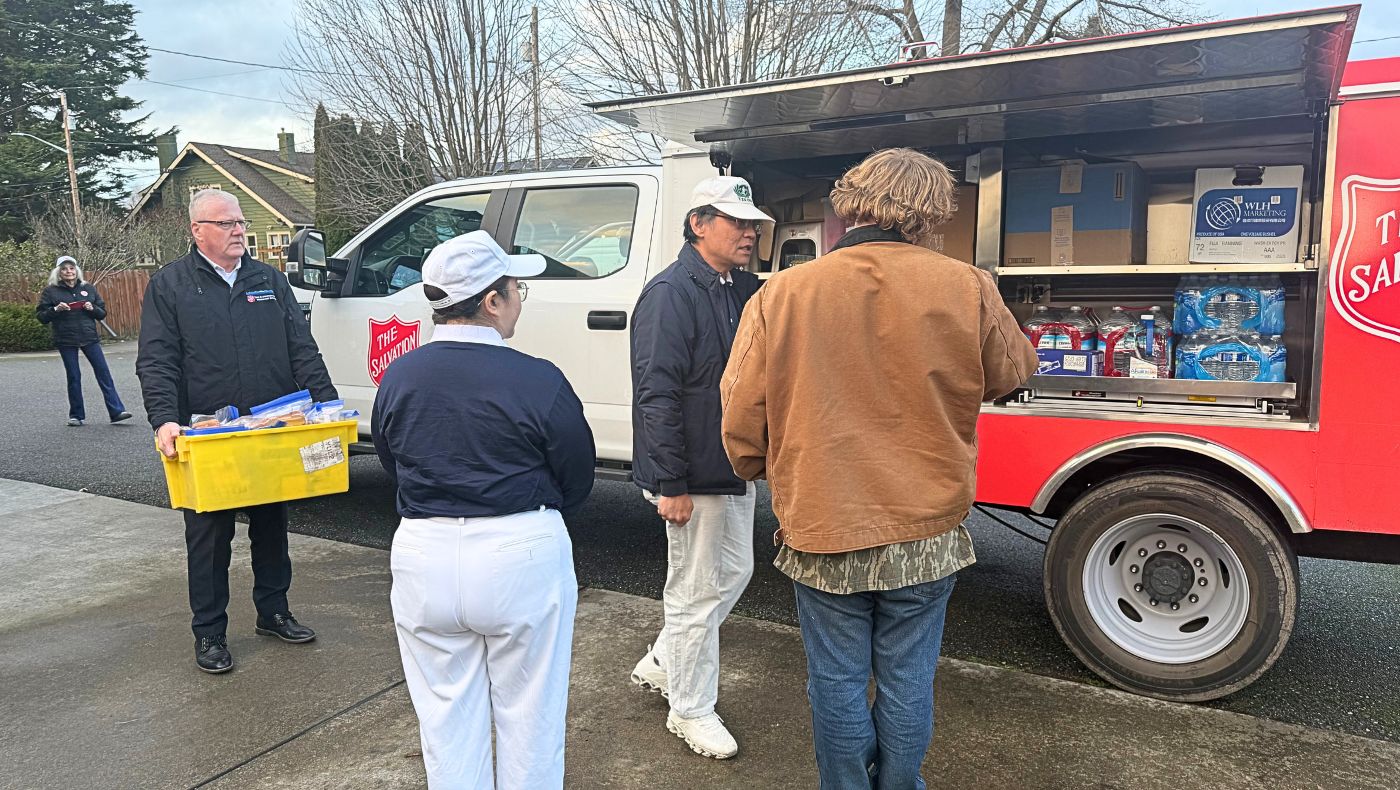
Another team partnered with The Salvation Army’s mobile canteen to travel through flood-affected communities, visiting churches, community centers, and shelter sites to distribute food and essential supplies. Their route took them through Concrete, Marblemount, and Sedro-Woolley in Skagit County, then on to Marysville in Snohomish County, and they persevered even when flood damage cut off access in certain areas and slowed travel.
Fallen trees and slope failure highlight travel challenges as Tzu Chi Seattle volunteers accompany The Salvation Army’s mobile canteen to reach flood-affected communities in December 2025. Photos/Tzu Chi USA Seattle Branch
While meals and supplies were appreciated, the volunteers found that many survivors were most concerned about restoring daily life and finding a clear way to request help. To make that process easier, the team gave out flyers with a QR code so affected residents could register online and begin the Tzu Chi assistance process. They also listened closely to residents’ concerns and noted the needs that would shape follow-up support.
The Tzu Chi Seattle team continued to accompany The Salvation Army’s mobile food canteen on December 19, reaching Sumas in Whatcom County and Mount Vernon in Skagit County that day. As volunteers distributed food and drinks and shared flyers with QR codes, they gathered additional information on needs and offered steady presence and comfort to residents, even in hard-to-reach communities along the way.
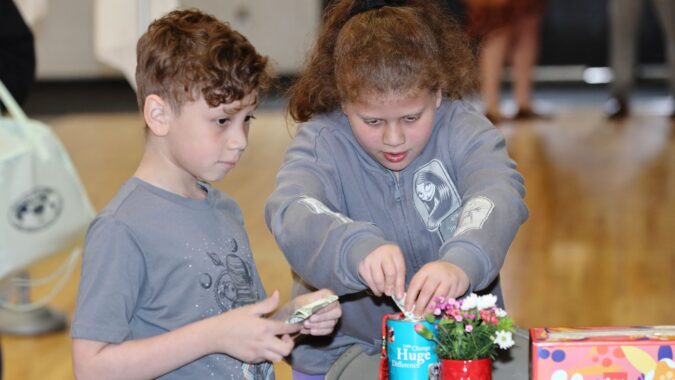
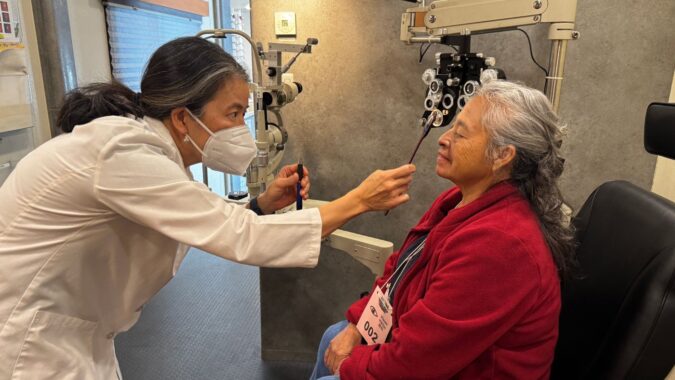
Children select their favorite frames during the iCare 510 vision care outreach at East Oakland Pride Elementary School in Oakland, California, on October 8, 2025. Photo/Jennifer Thai
Volunteers hold up mirrors to help children confirm their chosen frames are the best fit at East Oakland Pride Elementary School on October 8, 2025. Photo/Jennifer Thai
On December 20, Tzu Chi volunteers returned to the American Red Cross shelter site at Evergreen State Fair Park in Monroe, where they began distributing Tzu Chi eco-blankets and set up a form-filling assistance area to help evacuees complete aid applications. Grateful to be part of a broader relief effort, they also took time to connect with local first responders, respectful of their work.
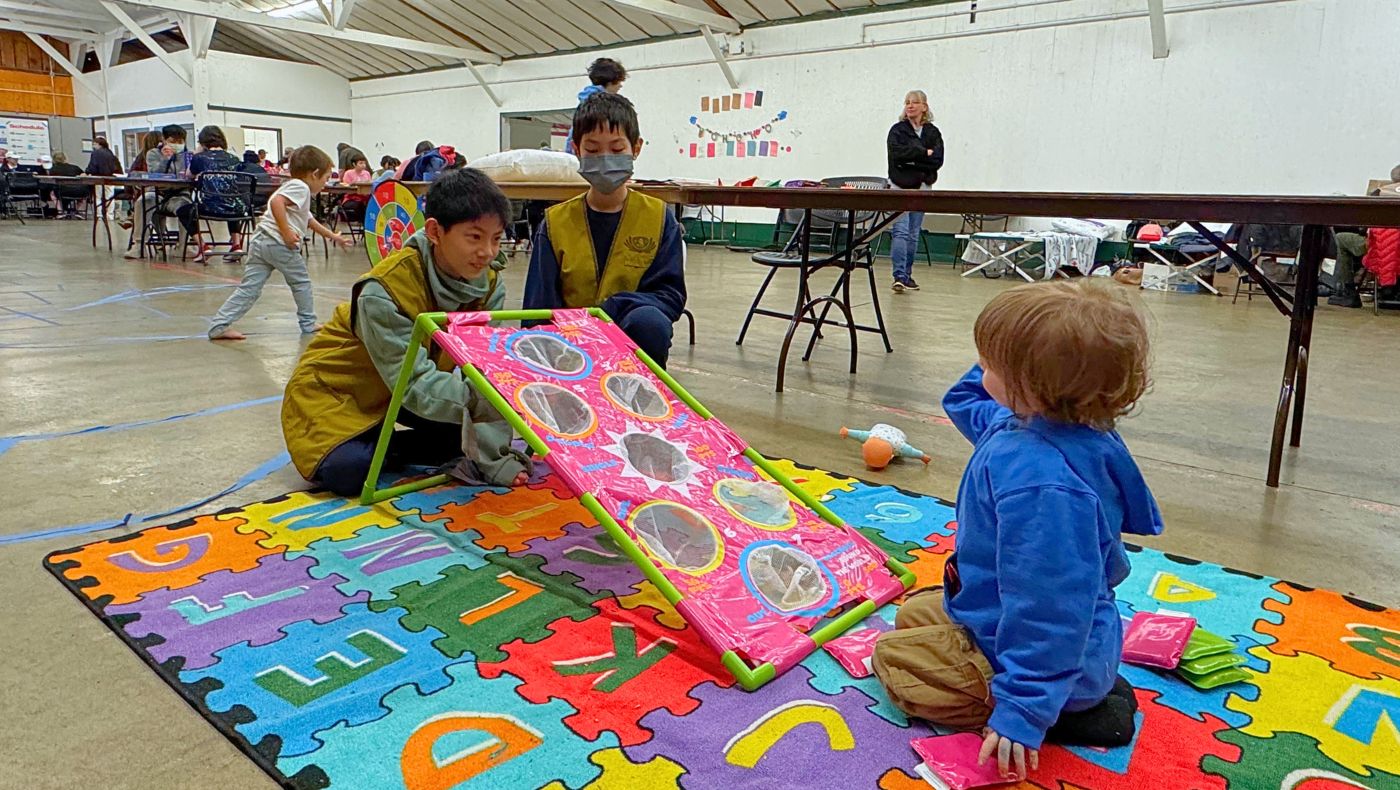
Teen helpers with the Tzu Chi team play with children staying at the American Red Cross shelter in Monroe, helping them relax. Photo/Tzu Chi USA Seattle Branch
At the same time, Tzu Chi’s Da Ai Children’s Care Team accompanied children staying at the shelter, engaging them through games and activities. Some of the volunteers on the team were youth themselves, which helped create a more relaxed, peer-to-peer atmosphere that put younger children at ease.
Continuing Field Outreach
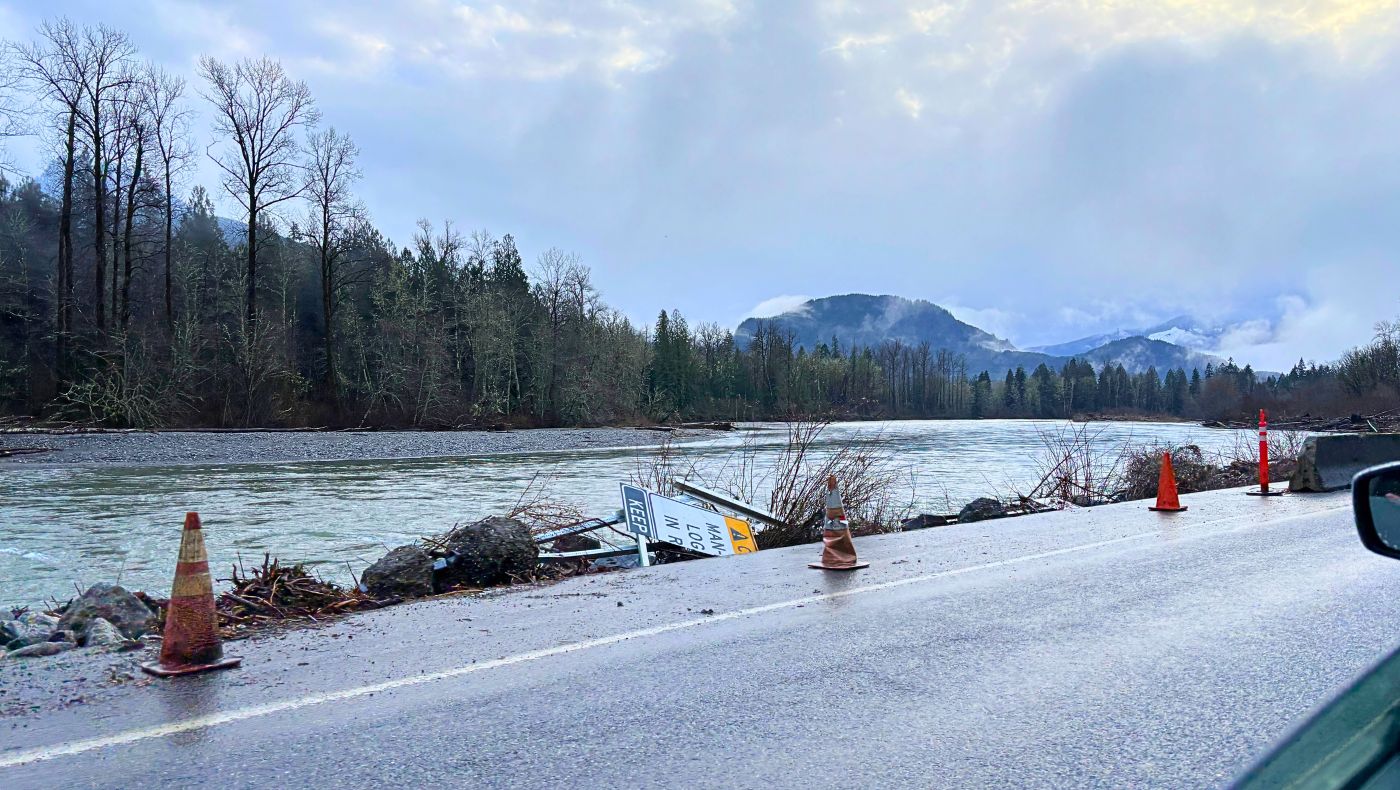
In the days leading to Christmas, the Tzu Chi Seattle volunteer team stayed in flood-affected communities, continuing relief visits and needs assessments while preparing to begin cash card distributions. On December 21, volunteers traveled to Mount Vernon and Concrete in Skagit County to provide material aid and moral support. Their drive passed through areas where the flood’s destruction was still evident.
The Tzu Chi Seattle team travels through flood-affected areas in Skagit County on December 21, 2025, where debris and swift river currents mark the storm’s impact. Photo/Tzu Chi USA Seattle Branch
At distribution sites, they used an “accompaniment” approach, walking alongside survivors as they considered the emergency supplies laid out on tables and selected items to meet their most pressing needs. The volunteers stayed close, answering questions, pointing out essentials, and helping people move through the stations step by step. A “Warm Station” offered hot drinks, adding a small measure of comfort as survivors began the long work of recovery.
Children select their favorite frames during the iCare 510 vision care outreach at East Oakland Pride Elementary School in Oakland, California, on October 8, 2025. Photo/Jennifer Thai
Volunteers hold up mirrors to help children confirm their chosen frames are the best fit at East Oakland Pride Elementary School on October 8, 2025. Photo/Jennifer Thai
During home visits along the way, the volunteers listened attentively as residents described the shock of watching water rise so quickly and showed the damage the flooding had done. The goal was to identify those facing serious long-term challenges and begin determining what follow-up support might be needed.
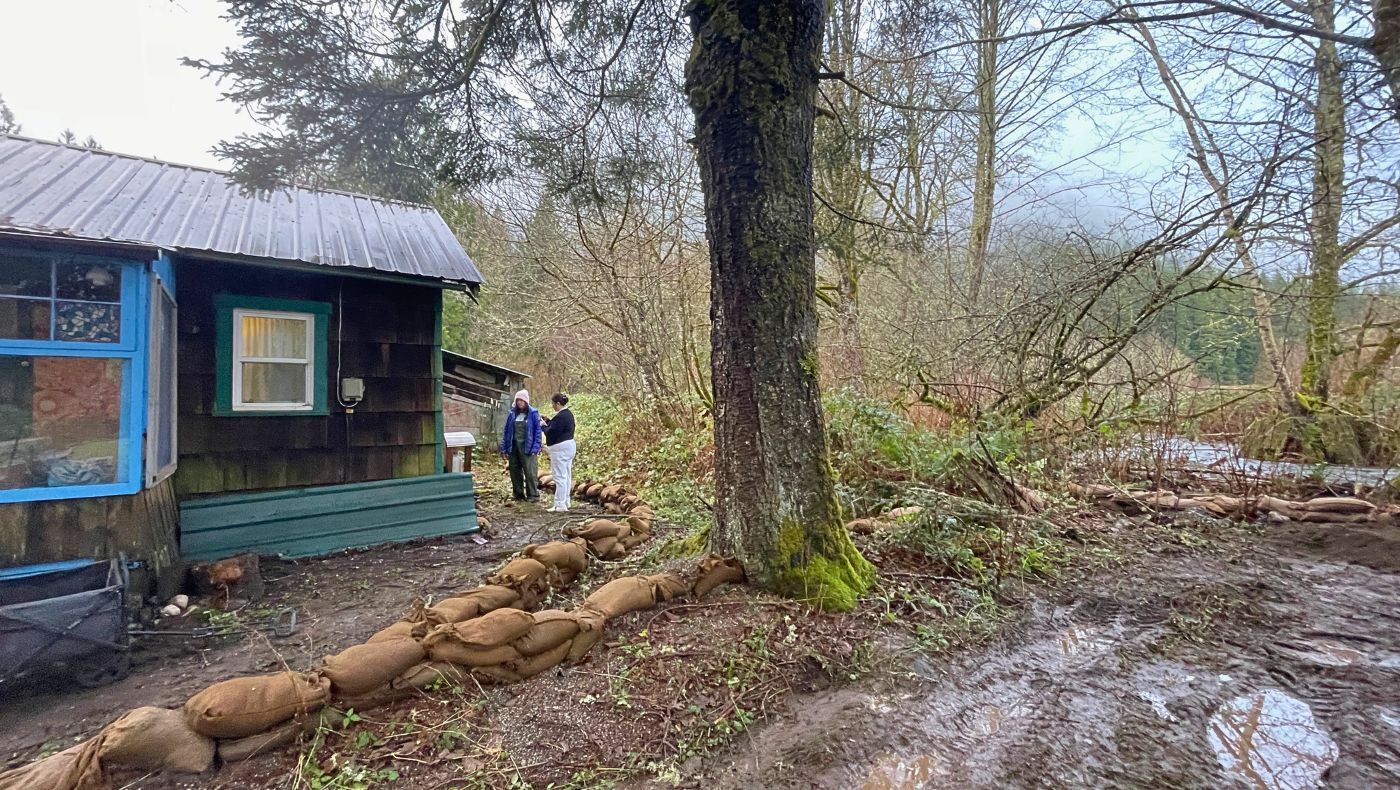
Near Concrete, they visited Amy Hammer, who lives in a 90-year-old house supported by a cedar-log and earth foundation. When the flooding began on December 8, Hammer did her best to protect her home, laying sandbags across her front yard. “The water was all the way up to these sandbags, and I stayed up all night raking leaves, raking the debris so the water would move,” she told the volunteers as they walked around the property.
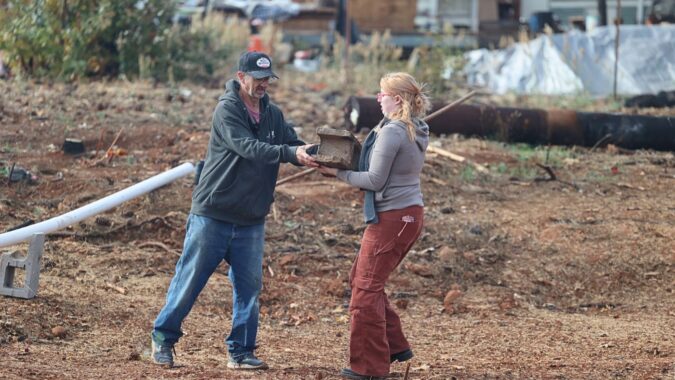
Sandbags line the creek near her home, as Amy Hammer explains that shifting flow since the December 2025 flooding continues to put her property at risk. Photo/Tzu Chi USA Seattle Branch
Hammer reinforced that barrier with additional sandbags later on, when more severe flooding was expected on December 11, but to no avail. “That’s when the creek went up over this hill, all the way up those sandbags. The water was coming here and hitting my poor little house. I couldn’t keep the water from going under the house, but I kept the water very still. And it was rushing past my front step,” she recounted.
Her biggest worry now was that the flood had altered the flow of the creek, putting her property at continued risk. “We’re trying to get some cribbing, some labor, and things to help naturally keep the creek from eating towards my house. That’s what I lay awake all night thinking about. I’m going to need to hire people to help me build this up, to get this gravel that all got deposited here and a lot out of that creek and into the driveway or something. I don’t even know if this is something anybody can help with,” she said.
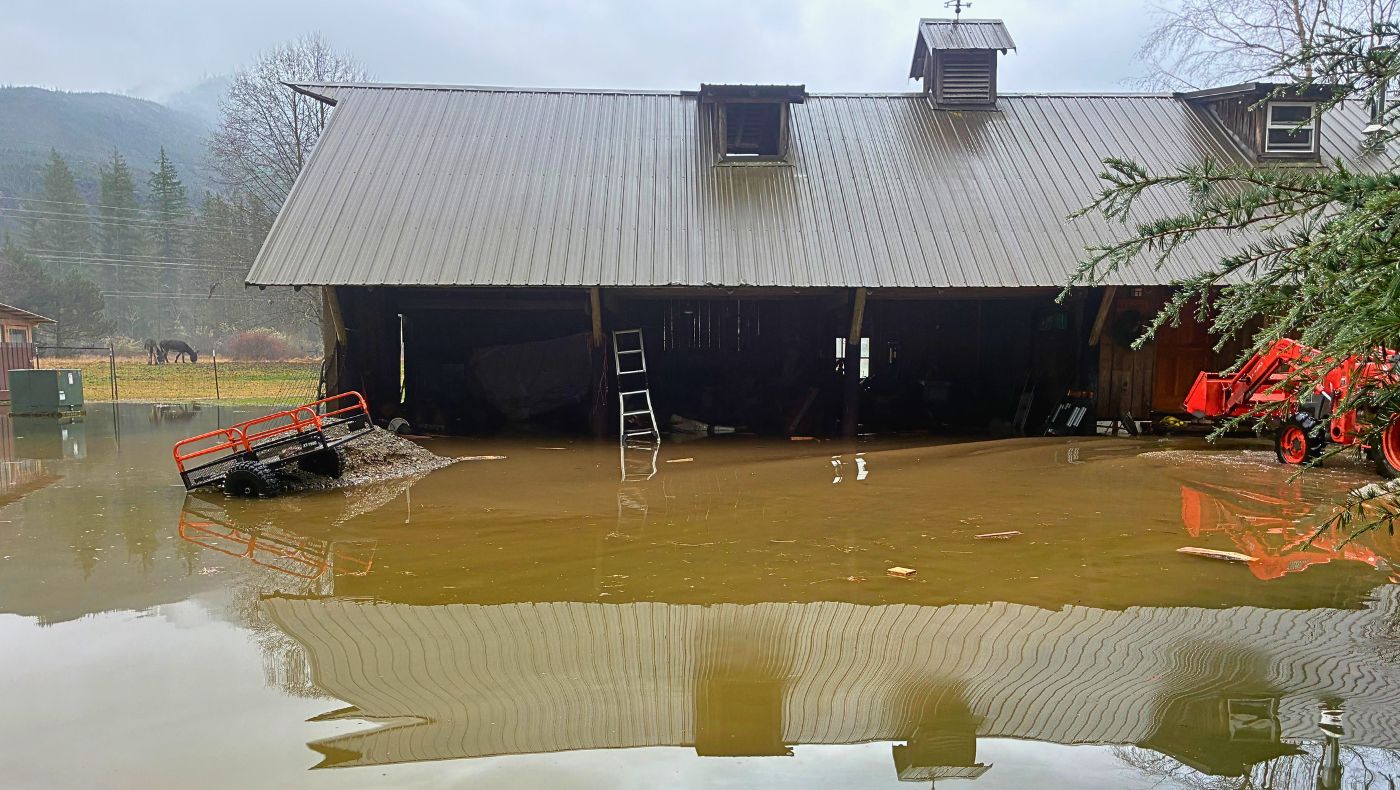
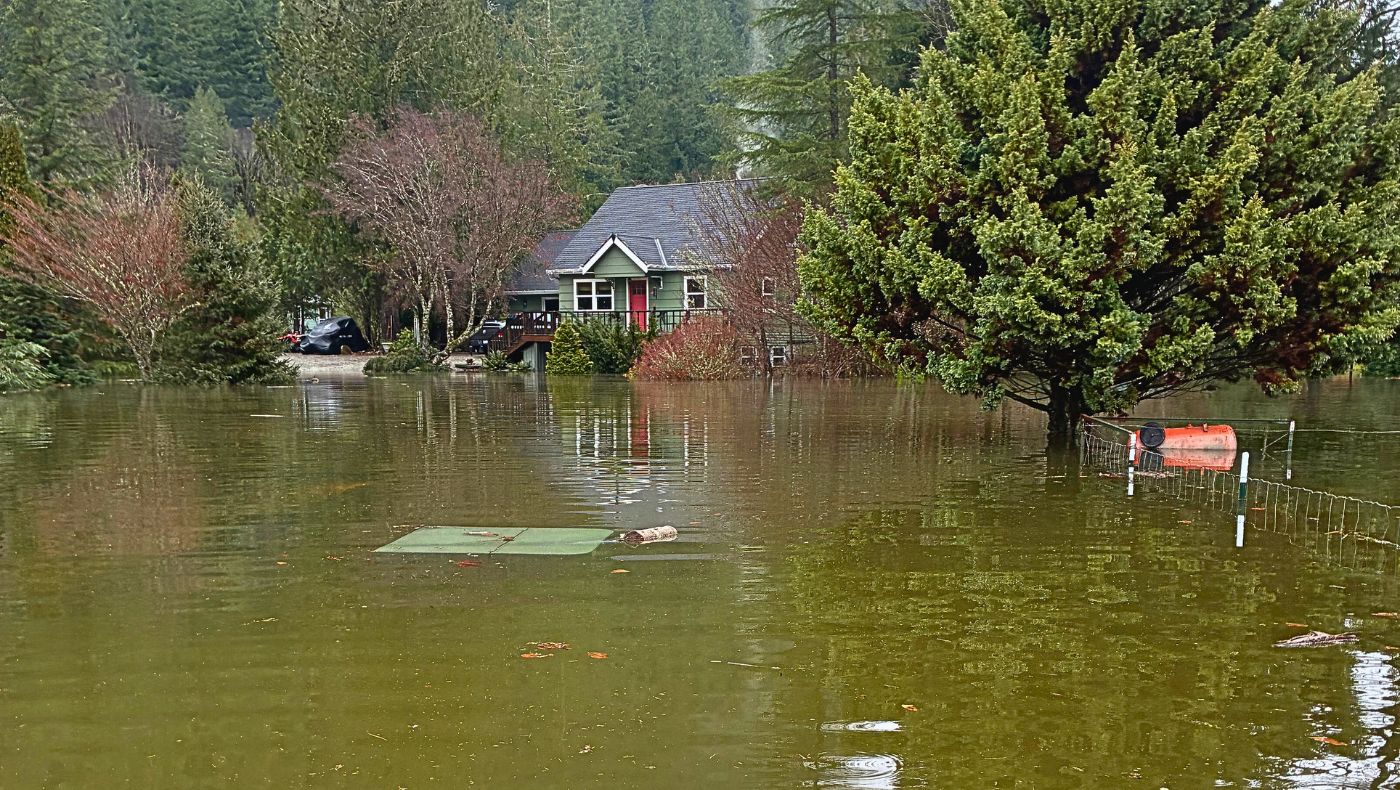
Floodwaters still surround parts of the property of Amy Hammer’s friend and neighbor, Cheryl Cunningham, after the December 2025 flooding. Photos/Courtesy of Cheryl Cunningham
During the visit, the Tzu Chi team discussed the possibility of providing assistance to pay for labor and equipment to help redirect the water flow. Still, Hammer was thankful because it could have been much worse. She also shared her friend and neighbor Cheryl Cunningham’s situation. Cunningham had lost major appliances and irreplaceable memories, but was grateful to have saved her beloved donkeys.
Laying the Groundwork for Cash Card Distributions
The Tzu Chi Seattle team continued collaborating with other response efforts, including joining a Washington Voluntary Organizations Active in Disaster meeting on December 22 and monitoring activities at Multi-Agency Resource Centers in Skagit and Snohomish counties. Through these conversations, volunteers discussed the region’s housing challenges and looked for ways to align intake and damage assessments so survivors would not have to repeat their stories across multiple rounds of paperwork.
As field visits continued, the team finalized a cash card distribution plan, working through limited Wi-Fi while monitoring changing weather, landslide risks, and deliveries of Tzu Chi eco-blankets and eco-bags for upcoming relief efforts. Because some survivors were staying in temporary shelters or hotels, volunteers also planned phone follow-ups to verify details and complete aid applications.
With those preparations in place, cash card distributions began on Christmas Eve, December 24, as volunteers set aside personal holiday plans to launch the first wave of relief visits across multiple locations. Read more in Part 2 of our coverage of this mission.
Through your love and care, you can support disaster relief missions such as this, as well as the full range of Tzu Chi USA Northwest Region’s activities, helping volunteers bring timely assistance that responds to individual and community needs as they arise.