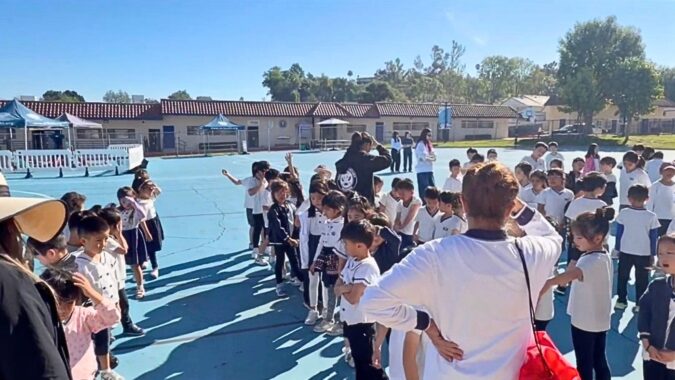
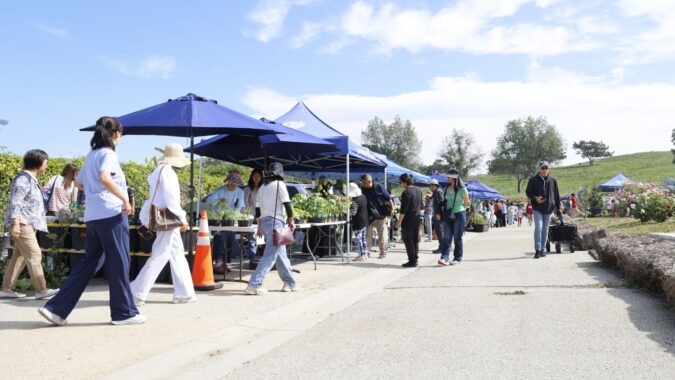
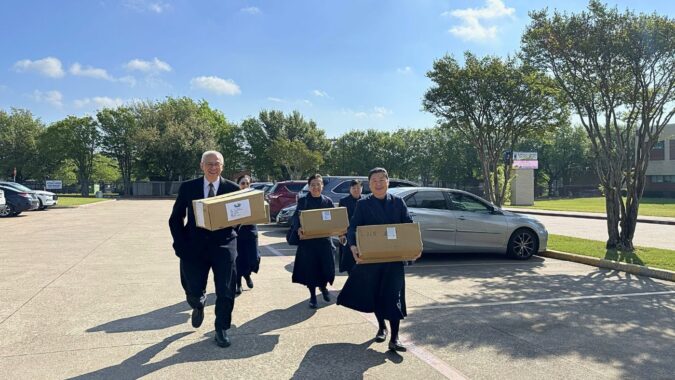
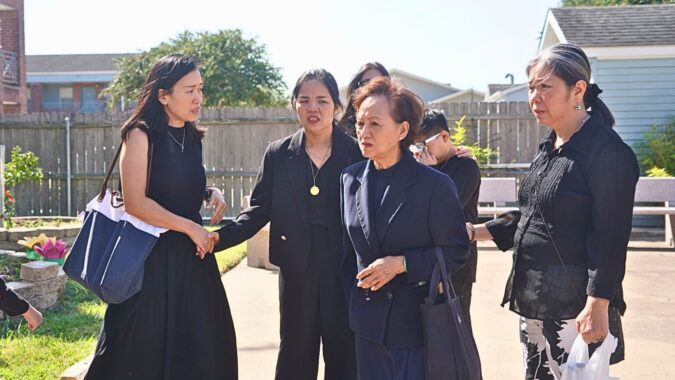
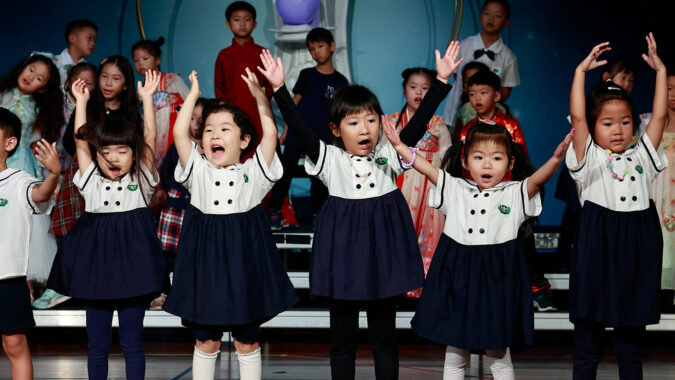
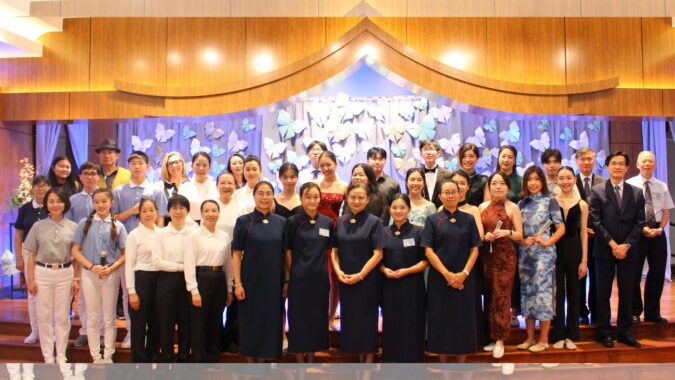
Tzu Chi Academy in Walnut, California, imbues youth with the charitable spirit of the bamboo bank through story-sharing, video presentations, and interactive Q&As. Photo/Tom Chen
Written by Chingchuan Shih and Yunling Li Translated by H.B. Qin Edited by Adriana DiBenedetto
Tzu Chi Academy in Walnut, California, has long imbued its curriculum with humanistic education teachings that seek to nurture the heart as well as the mind. One way it does so is by incorporating Tzu Chi’s unique bamboo bank philosophy into its humanities curriculum each year. Through stories, videos, and interactive teachings, students uncover Tzu Chi’s origins and spirit, and learn to help people, experiencing how even small acts can accumulate into a powerful force for good.
From Fifty Cents to a Cycle of Great Love
This spirit of compassion, carried forth through the bamboo bank spirit, has echoed across decades, beginning in the heart of Tzu Chi’s founder, Dharma Master Cheng Yen. In 1966, Dharma Master Cheng Yen, then a nun in her twenties, was moved by the suffering she saw around her, and knew she had to do something. Joined by her disciples, she set aside funds over the course of a year in bamboo tubes to aid those in need. Together, her followers, 30 women, put small change aside each day before purchasing food for themselves, whilst crafting baby shoes to sell.
And so, on a chilly January morning in 1983, a group of nuns and female lay followers carrying tools gathered in a field in Hualien, Taiwan. Their goal: Clear a space where a new hospital would one day stand. Once dismissed as a daydream, the Tzu Chi General Hospital was inaugurated in 1986. The Buddhist Tzu Chi Foundation’s footprint of charity and humanitarianism now spans the globe. To this day, Tzu Chi continues to use a symbolic iteration of these bamboo tubes — the Foundation’s signature bamboo banks — as an everlasting reminder of this loving act.
According to Tzu Chi Academy Walnut Principal Kevin Chang, the school incorporates the bamboo bank theme into its curriculum and designs a special unit each year. This gentle introduction to Tzu Chi’s origins helps students understand that everyone can play a part in shaping the future through small, daily acts of kindness. And when combined, these small acts can have lasting, far-reaching effects.
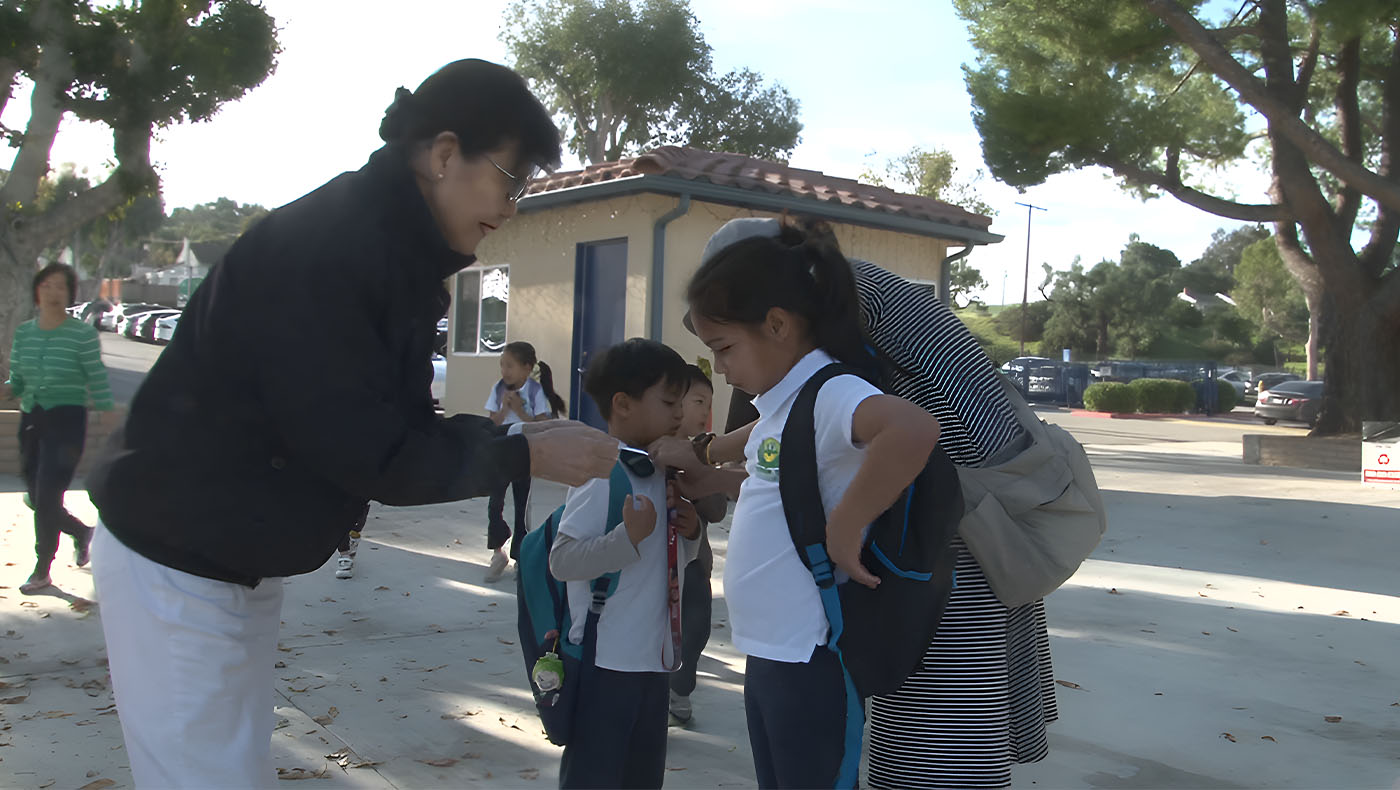
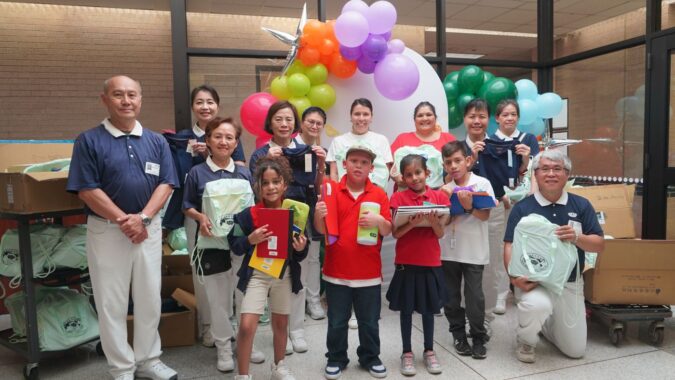
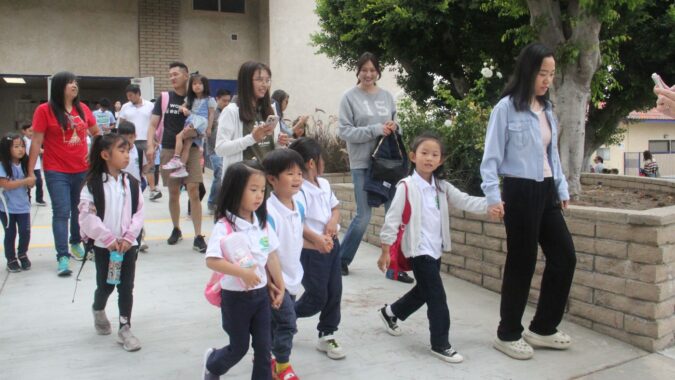
Character education begins the moment students enter the school. Photo/Tom Chen
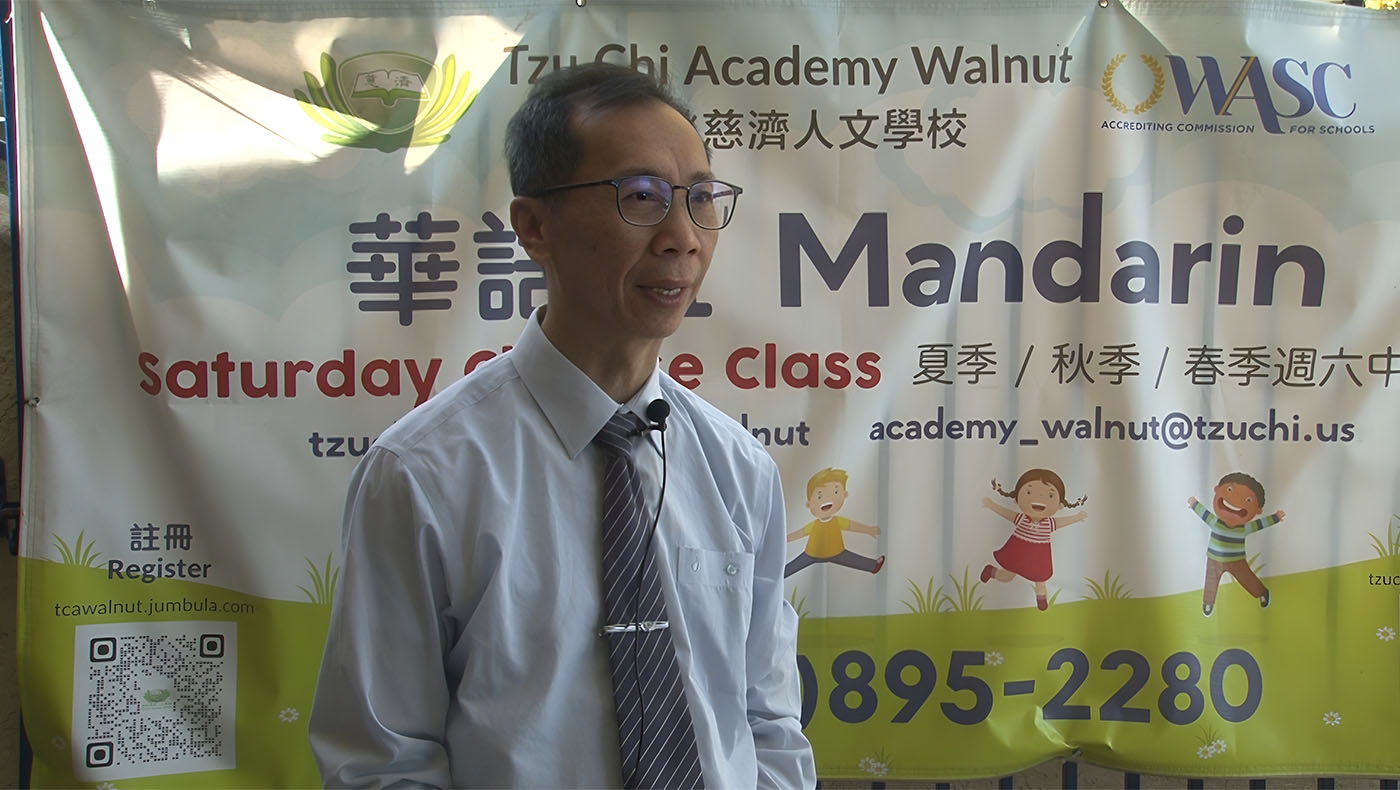
Tzu Chi Academy Walnut Principal Kevin Chang introduces students to the origins and spirit of Tzu Chi. Photo/Tom Chen
To help introduce students to the bamboo bank philosophy, educators share heartfelt videos and photographs that chronicle Tzu Chi’s earliest years, and how Dharma Master Cheng Yen continues to inspire Tzu Chi members today through charitable missions near and far.
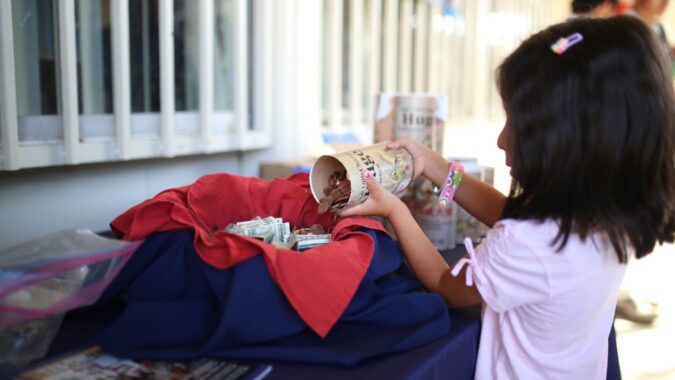
After learning the story, the children began saving their daily allowances and New Year’s red envelope money. By pooling these small contributions, they harnessed the power of compassion to help those in need, truly grasping the meaning behind the bamboo bank.
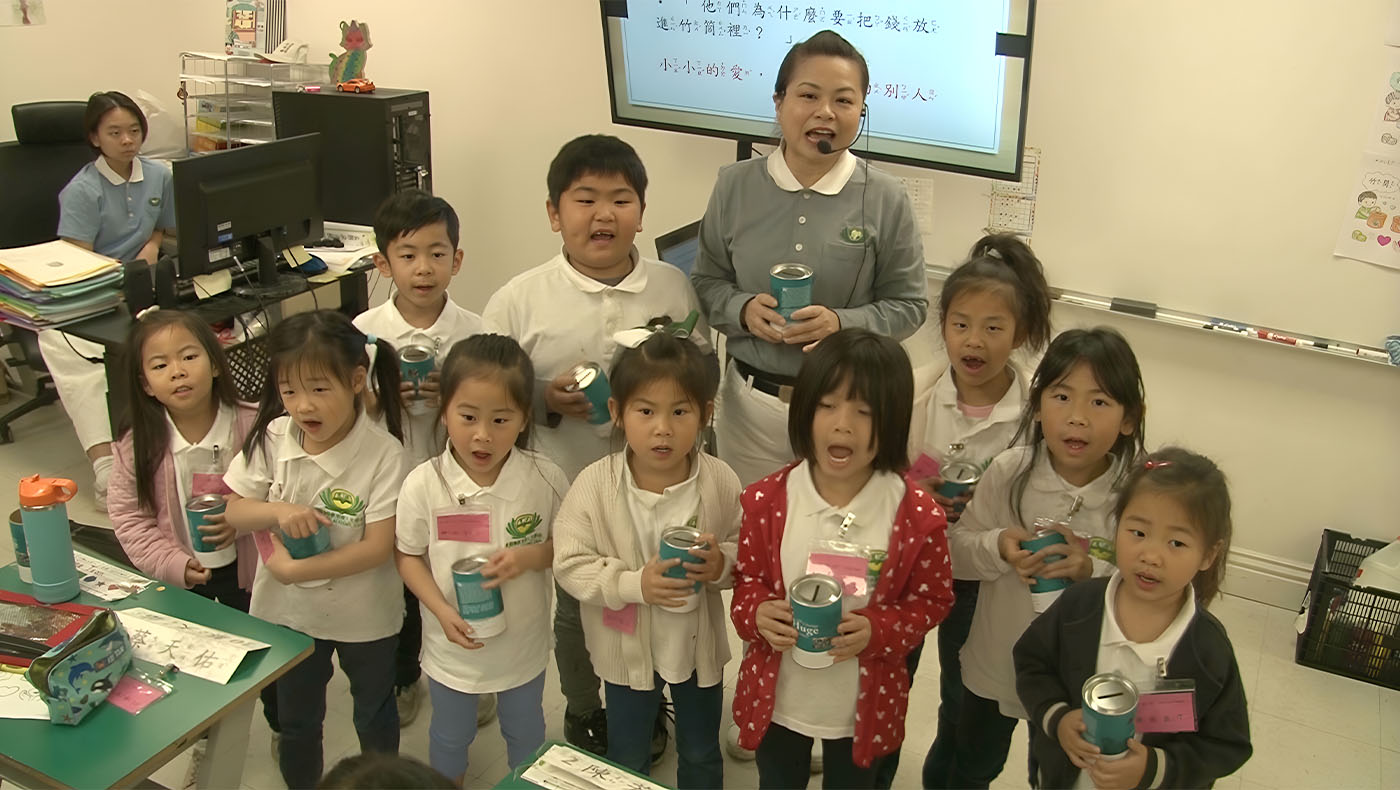
A Tzu Chi Academy Chinese Language Class teacher, Marianne Pan, guides younger students to understand that saving just 25 cents at a time can add up to help others. Photo/Tom Chen
A Tzu Chi Academy Chinese Language Class teacher, Marianne Pan, shared that in preparation for the upcoming “Bamboo Bank Homecoming” event on February 14, 2026, she guided younger students through lessons to help them understand that saving just 25 cents at a time can add up to make a difference in the lives of others. “This lesson helps children understand that, regardless of age, everyone can be involved in compassionate acts in their own way, and grasp the spirit of accumulating small acts into something greater, just as Master Cheng Yen began by just saving fifty cents, and gradually built it into a grand compassionate initiative, aiding suffering beings worldwide. It’s a profoundly meaningful humanities lesson.”
Cultivating the Power of Daily Kindness
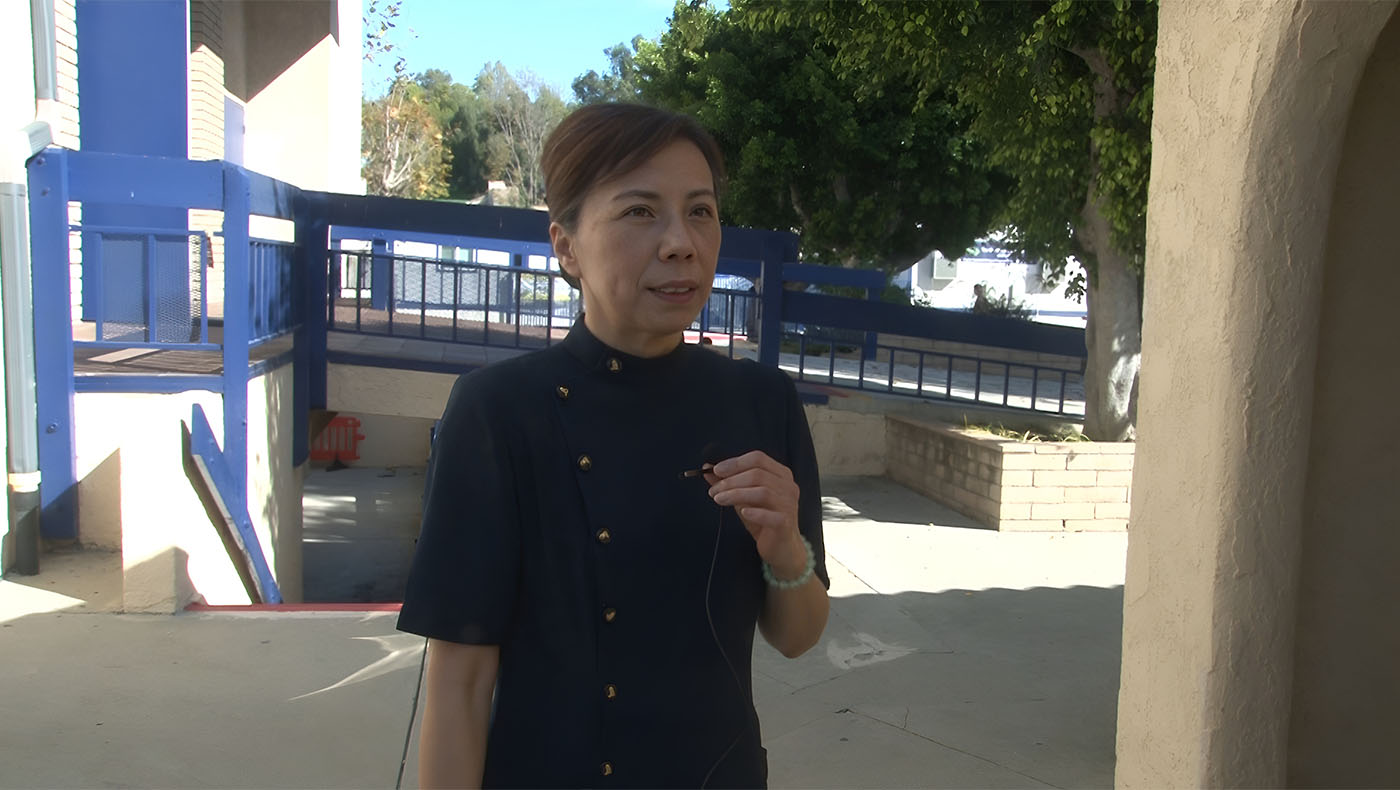
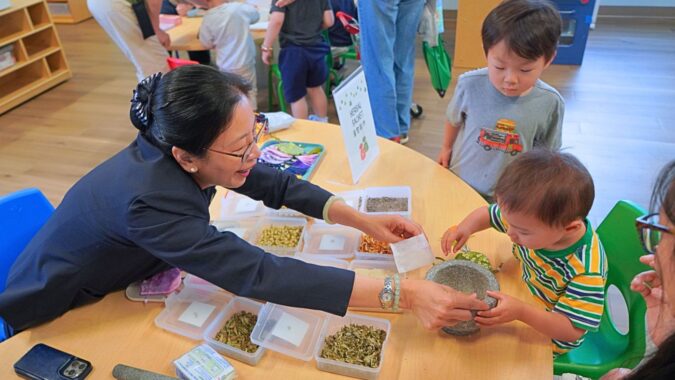
Tzu Chi volunteer Ting-Yun Chou noted that the lesson allowed children to learn by asking simple, practical questions. They gradually came to understand what kind of organization Tzu Chi is, and grasped the spirit of daily kindness embodied by the bamboo bank. Chou hopes her students will seize every opportunity to do good, learn to proactively care for and assist those in need as they grow, and make compassion an integral part of their lives.
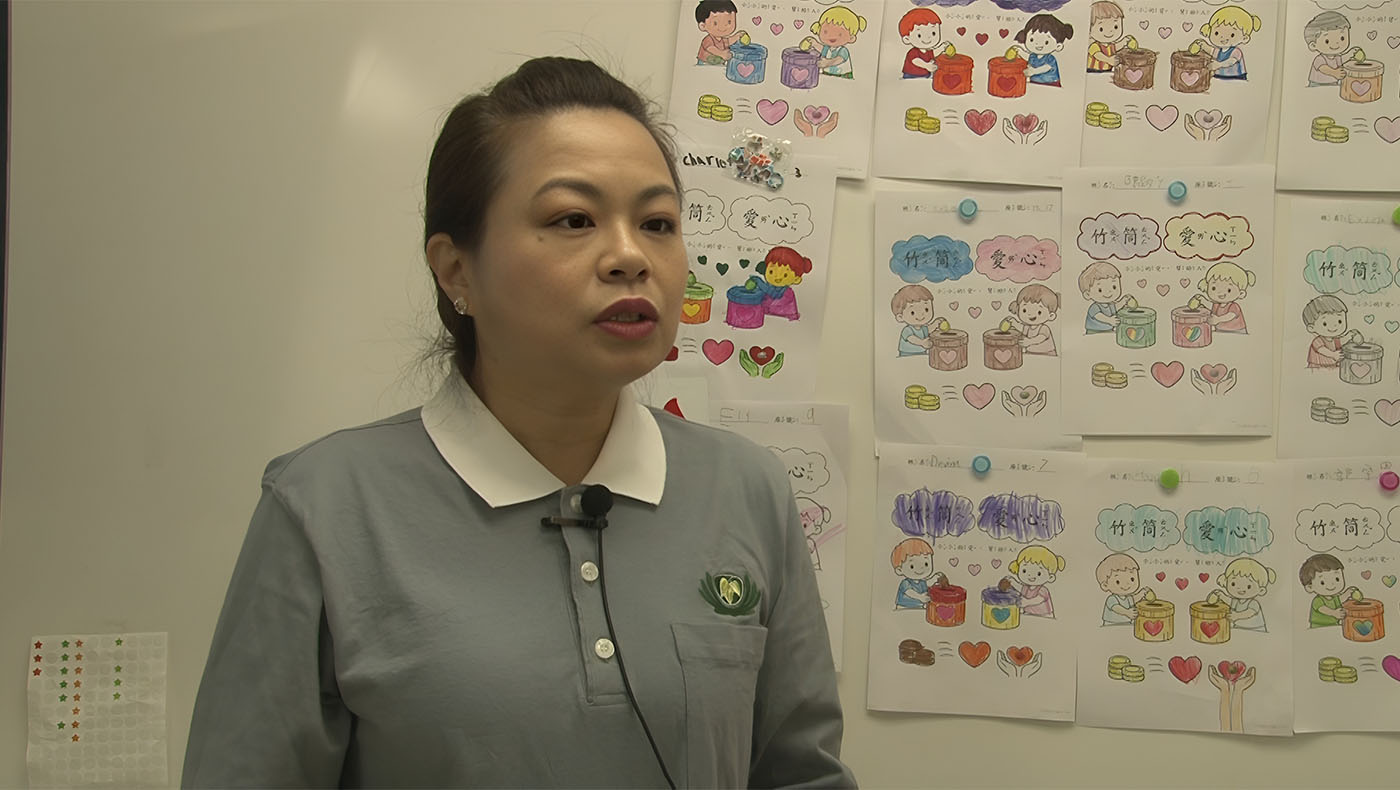
Tzu Chi volunteer Ting-Yun Chou helps children understand the spirit of doing a good deed daily, as embodied by the bamboo bank. Photo/Tom Chen
“This humanities lesson shows children that charity isn’t just for the wealthy,” said a mother named Kang Huei Hua. “Every child can transform small change into hope through gradual accumulation and help others.”
Teacher Hetty Tsai shared that the bamboo bank teaches children to be considerate of others, cultivate compassion and care, and genuinely think about how to help those in need. Tsai also shared that such teachings are profoundly important and meaningful for children’s character development.
Saving a Little Love Each Day
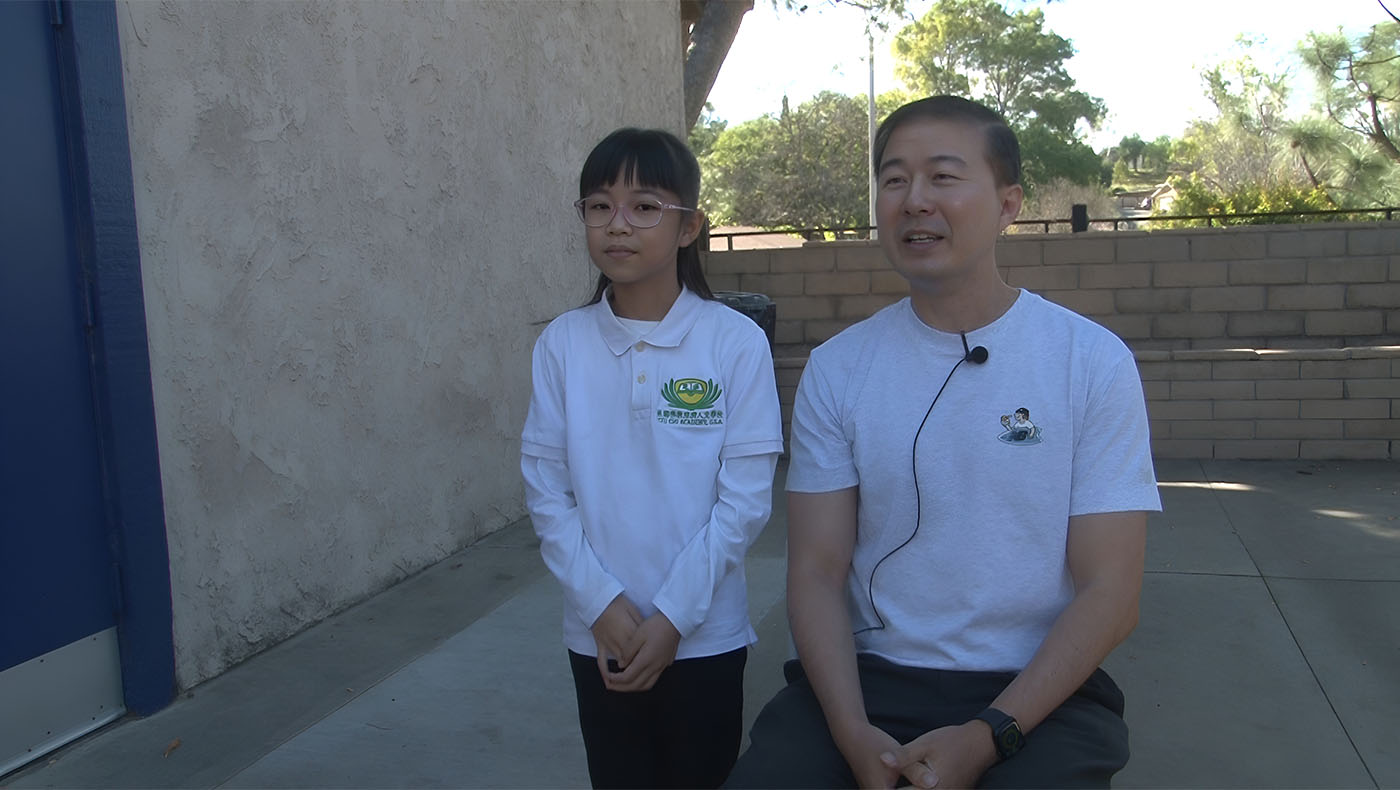
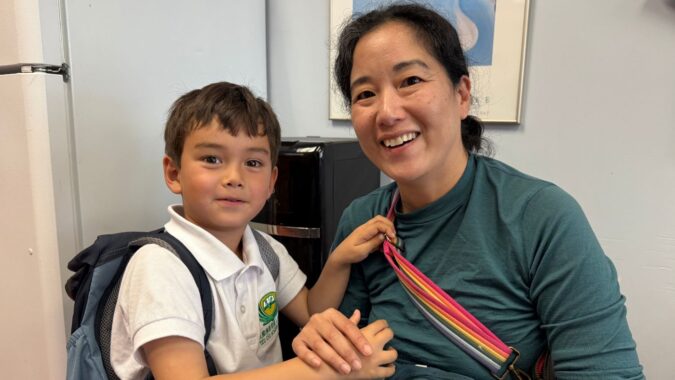
Chien Yang, a father originally from Yuli Township in Hualien, Taiwan, shared his personal story. He recalled that in 1998, while attending Yuli Junior High School, a typhoon caused the river to overflow its banks. The first floor of his home was completely submerged, and all their belongings, including their food supplies, were swept away. In that moment of utter helplessness, Tzu Chi volunteers arrived promptly with steaming vegetarian meals and worked to clear the debris. He still remembers and cherishes that act of compassion today. Driven by that profound gratitude, he brought his children to Tzu Chi Academy, hoping the next generation would grow up nurtured by that same spirit of universal compassion, continuing the cycle of great love.
Chien Yang first connected with Tzu Chi after a typhoon while in junior high. Pictured beside him is his daughter, Felicity Yang. Photo/Tom Chen
Tzu Chi Academy student Felicity Yang shared her straightforward yet profound insight as well. “Every day, I save a little money and give it to the aunties,” she said. “They can use that money to help people in need, giving them food and clothes.”
These simple and genuine words of care capture the very essence of the bamboo bank: small acts of compassion, accumulated daily, ultimately grow into a great love capable of changing the world.