Written by Vivian Chang
Translated by H.B. Qin
Edited by Ariel Tsai
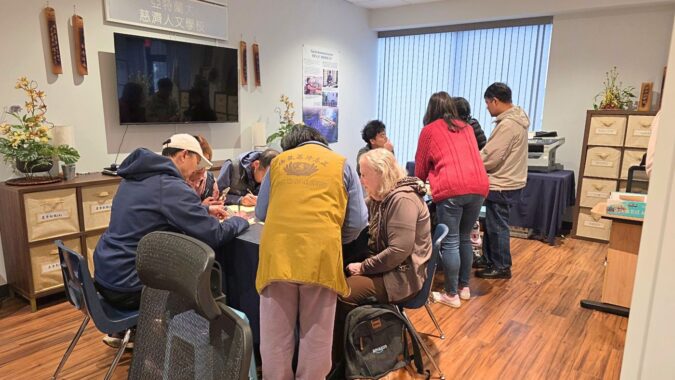
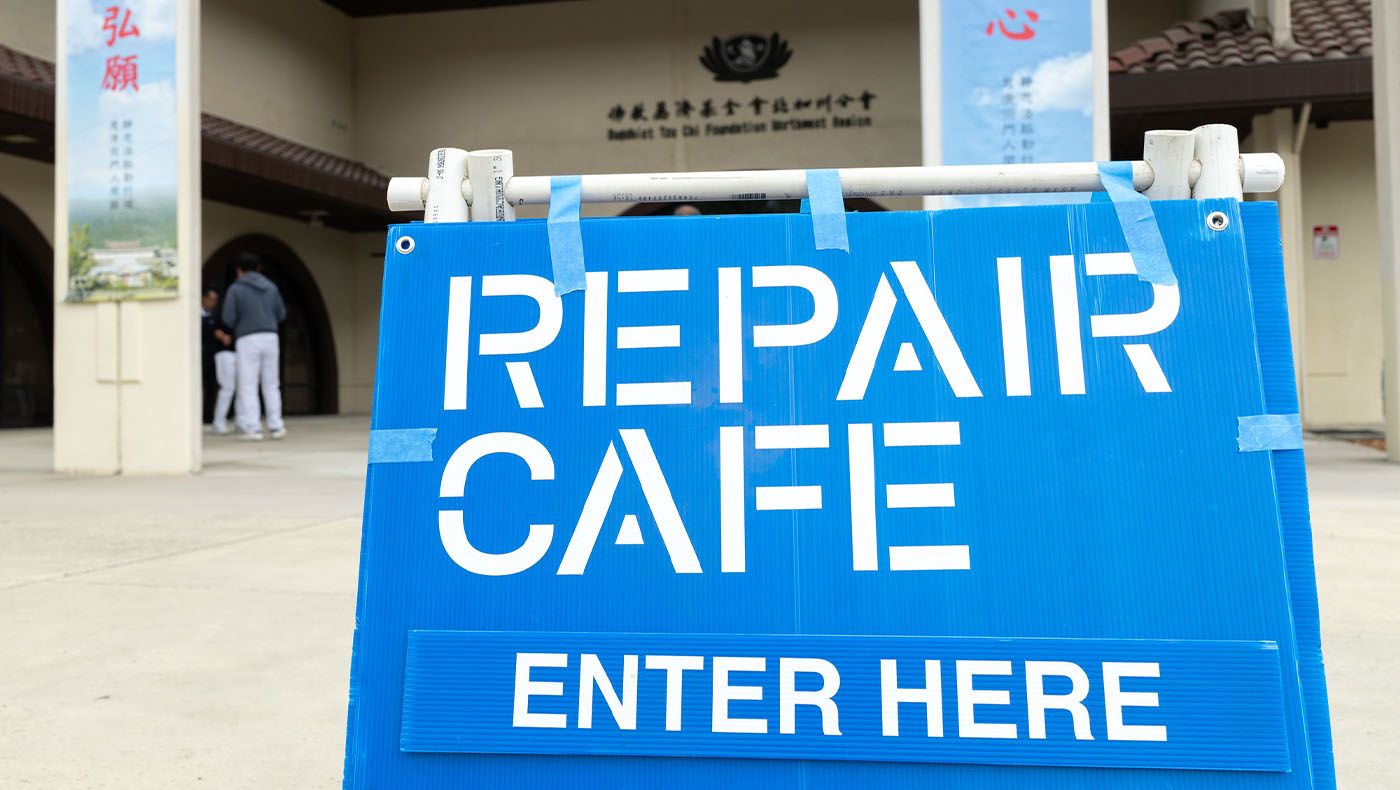
On a Sunday morning in May, the Tzu Chi USA Northwest Region San Jose Campus was livelier than usual. Shortly after opening, people began arriving in the parking lot one after another, bringing bicycles, vacuum cleaners, electric kettles, rice cookers, sewing machines, and small appliances. Some carried household items that had been broken for years; others pushed bicycles with flat tires. There were people who came simply to try their luck and “see if they could fix it.” This day marked the long-awaited Repair Café event.
The concept behind the Repair Café is actually quite simple: extending the lifespan of household items by repairing them, hence reducing waste and trash. As the volume of items sent to landfills is decreased, interpersonal connections and a spirit of mutual aid within the community are rebuilt.
When arriving at the scene, one would realize that what the Repair Café repairs is beyond items. The Repair Café mends and restores relationships between human beings, revives people’s perception of cherishing their items, and rekindles the DIY skills and confidence that modern society is gradually losing.
Digital Registration Creates a Smoother Experience
Serving a total of 116 residents who brought 164 household items for repair, the activity was a resounding success: The scene resembled a large community repair shop with a variety of items waiting to be repaired, from bicycles, kitchen appliances, and sewing machines to all kinds of small electronic devices.
Many people noted that the process of this event was smoother and more organized than before, with waiting times significantly reduced. One of the biggest changes this time was the full implementation of a digital registration system.
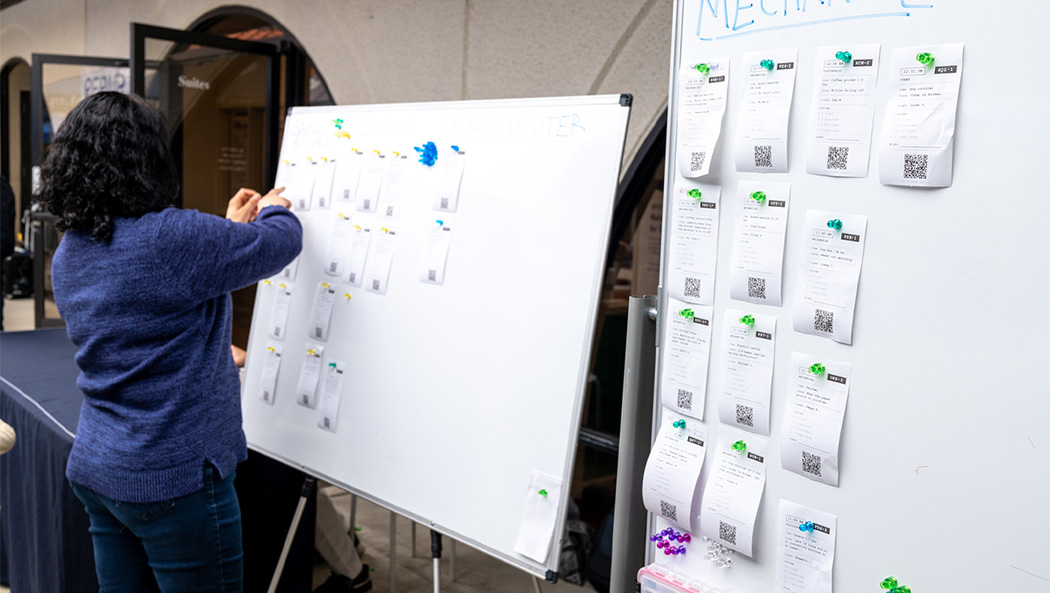
In the past, handwritten registration forms were used, and illegible handwriting and incomplete information often made it difficult for volunteers to process the data. This time, residents could fill out the repair item details online by simply scanning a QR code.
Once the form was completed, the system immediately printed out a queue number and a repair work order, with which residents could take a seat and wait with peace of mind instead of crowding anxiously at the registration area. Some sat down, drank tea, and chatted, while others watched the repair technicians at work. Children stood close and intently watched as the technicians took apart various devices and appliances. The atmosphere on site was not as rushed as that of a typical repair shop; instead, it was filled with a sense of community interaction and mutual support.
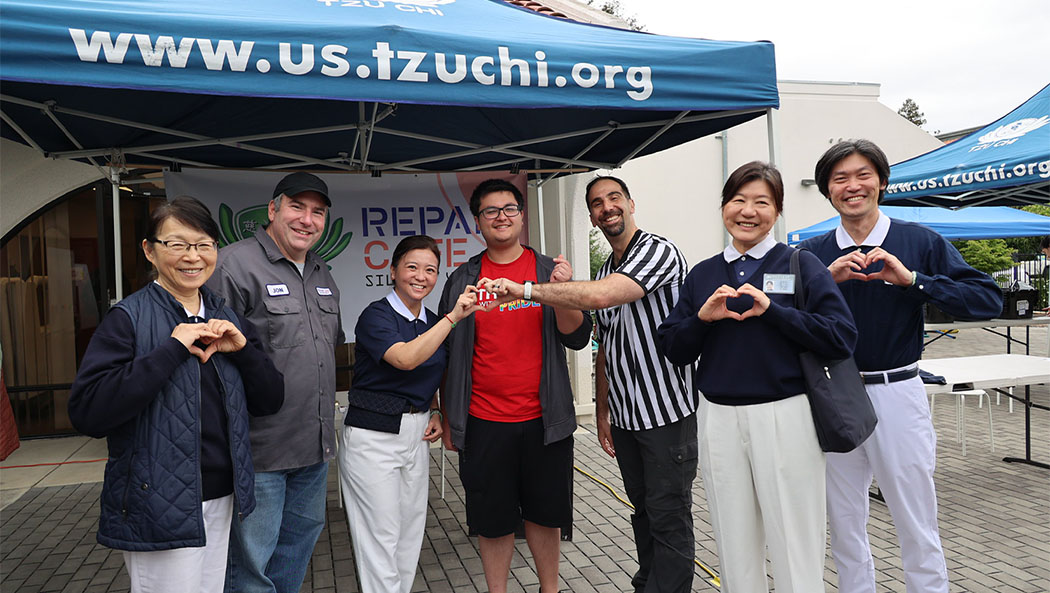
Government and NGO Join Hands to Advocate for Sustainability
In addition to improvements in the activity’s workflow, this Repair Café featured another significant and much-appreciated collaboration. Tzu Chi is deeply honored to have received a grant from the City of San Jose to help organize the Repair Café and advocate for sustainability and environmental initiatives. This partnership represents more than just financial support; it symbolizes the joint efforts of local government and NGOs working toward sustainability, environmental protection, and waste reduction. Colin Ford from the San Jose Environmental Services Department came to the event to share the city government’s support for and expectations of the Repair Café.
This collaboration also makes the Repair Café more than a simple community activity, but an important platform for advocating environmental education, resource reuse, and sustainable living.
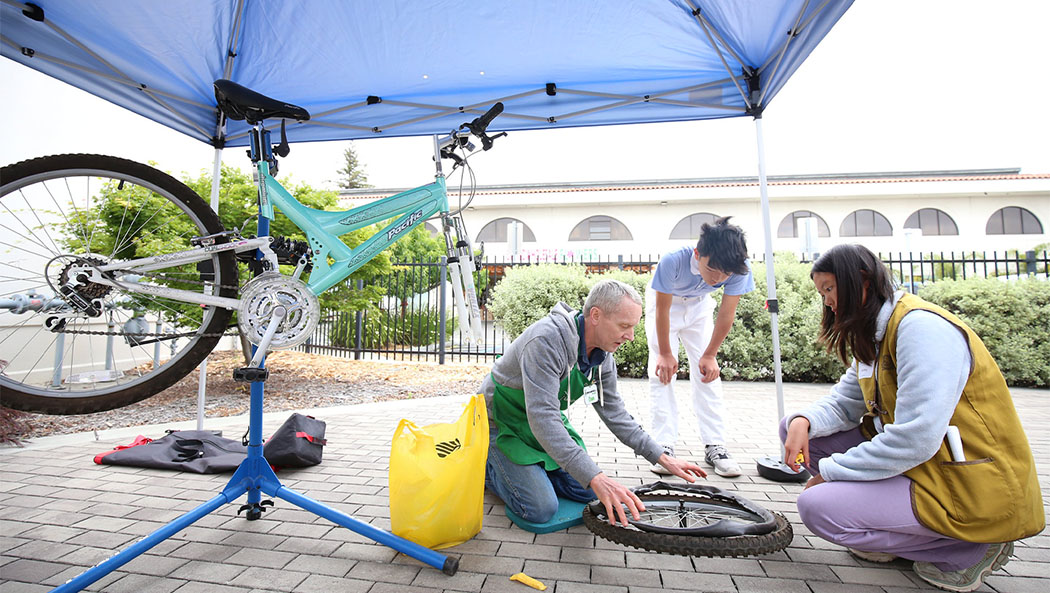
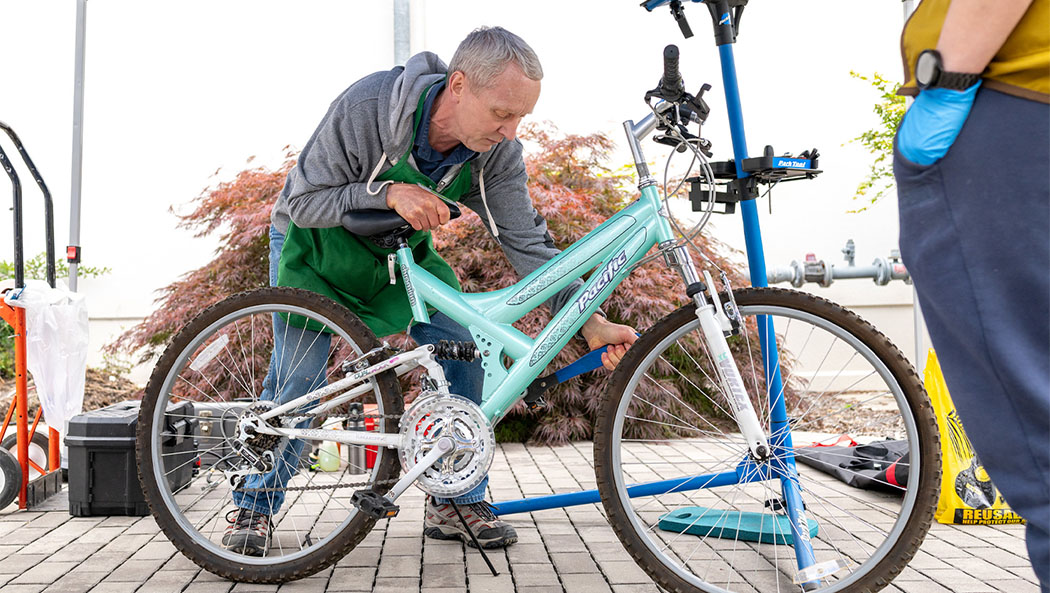
Volunteer Dan Freitas teaches two youths how to repair bicycles. Photo/Pohan Chen
From Hobby to Sharing: Repairing Volunteers Pass on the Spirit of Repair
One of the liveliest areas on-site was the bicycle repair station. Many people arrived with their bicycles; some had flat tires, some had loose brakes, while others had malfunctioning derailleurs.
Dan Freitas is one of the repair volunteers at the bicycle repair station. Anyone seeing him for the first time would find it hard to believe he isn’t actually a professional bike repair technician. His skilled movements and ability to quickly diagnose problems make him seem just like a pro.
Dan said that he is actually just a volunteer who dedicates himself to bike repair since retiring. In the past, he was part of a team at Valley Health Foundation called Turning Wheels for Kids, where he assembled and repaired bicycles for children.
“A lot of people fix bikes simply because they enjoy riding them,” Dan said with a smile.
“After riding for a while, you start learning to fix your bike. You’ll know how to do it gradually. Most of us aren’t professional technicians.”
During the activity, he patiently taught two youths how to change inner tubes and adjust brakes. One of the youths happily exclaimed, “I can change a tire now!” Dan said this is exactly what he loves most about the Repair Café.
The best part is letting the children know that when something is not working, it doesn’t necessarily have to be thrown away. They can fix it themselves. What’s truly important about the Repair Café isn’t just fixing things, but changing people’s mindsets. It’s about helping them believe, ‘I can fix this.’ That’s what matters.
Dan Freitas, Bicycle Repair Volunteer
After the principal organizer retired, the bicycle repair team Dan had previously been part of gradually ceased operations. Later, he happened to come across information about the Tzu Chi Repair Café online and found that it had a bicycle repair station, so he took the initiative to join.
“It’s just great here. Everyone shares similar values, and the site and organization are excellent,” he said.
Tatsuya Okamoto, a youth volunteer participating as an intern at the bicycle repair station and a member of the Tzu Chi Youth Association’s Gratitude Team, gained a lot during the day. He said that he learned how to replace inner tubes, patch tire punctures, and perform basic brake adjustments. He had originally hoped to learn more about derailleur maintenance, but after getting hands-on experience, he realized it was much more complicated than he had imagined. He laughed and said he might need to come back a few more times before he can truly master it.
“One of the most valuable aspects of the Repair Café is this learn-by-doing atmosphere. No one expects you to be an expert. The willingness to learn and try is already a rare quality,” said Tatsuya.
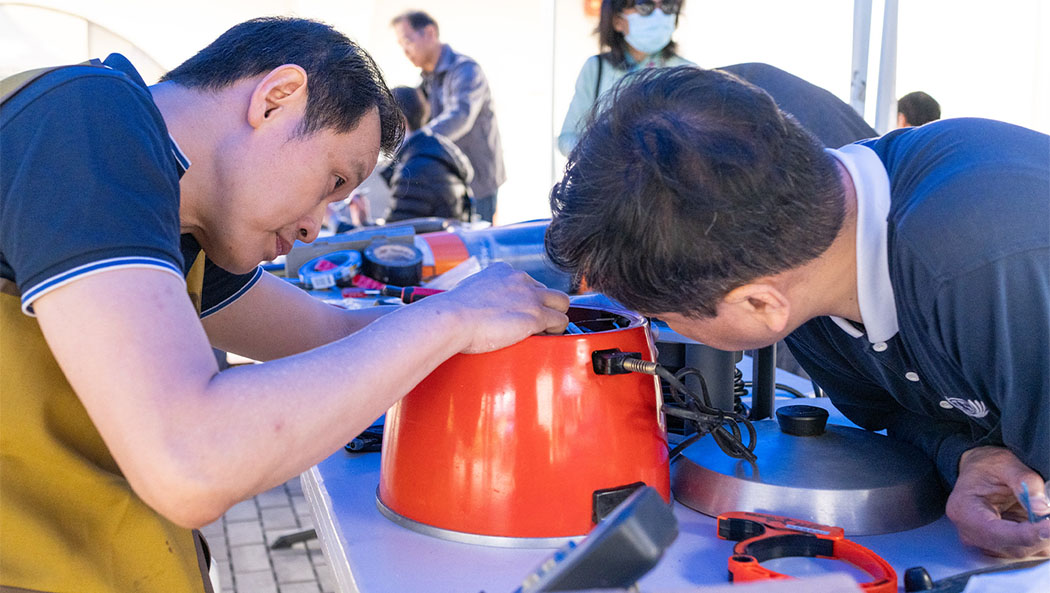
Every Old Appliance Has a Story
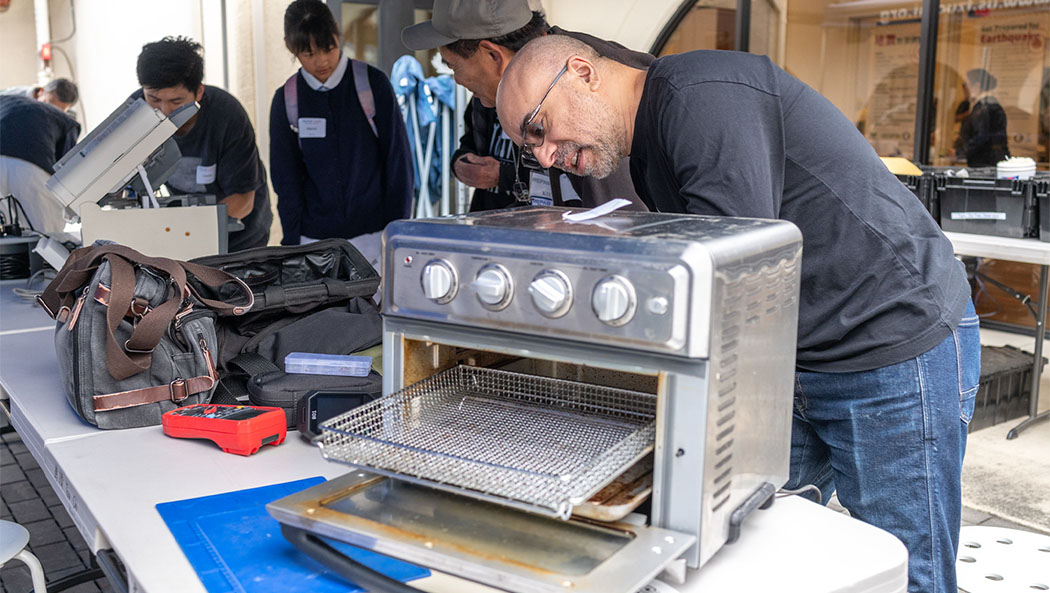
The appliance repair station also saw many memorable stories. Wyant Chan signed up as a repair volunteer for the first time and was assigned a Tatung rice cooker. The problem was that he had never repaired a rice cooker before, but he didn’t back down. He disassembled the appliance while looking up information and even watched relevant YouTube tutorial videos on the spot, working hard to figure out the cause of the malfunction.
After a lengthy inspection, he finally identified two parts that needed to be replaced. Although he couldn’t complete the repair on the same day, he found the parts on a Taiwanese website. The rice cooker’s owner, Hindy Hsu, explained that this rice cooker was part of her kitchenware dowry from years ago and had even made the long journey across the ocean to California, a journey that began forty years ago.
“Although it can’t be repaired now due to a lack of parts, seeing the volunteer work so hard from the early morning to identify the problem, try different repair methods, and do everything possible to fix it truly moved and impressed me! What’s even more admirable is that they went so far as to look up the names and models of the replacement parts I needed in advance and provided photos for my reference. This service is so thoughtful that I can’t help but give them a big thumbs-up and offer my highest praise! The next time I return to Taiwan, I’ll purchase the parts and bring this rice cooker back for further repairs at the next Repair Café activity.”
This process, in fact, embodies the very essence of the Repair Café’s mission. Although not everything can be fixed right away, every attempt and the spirit of not giving up easily is significant.
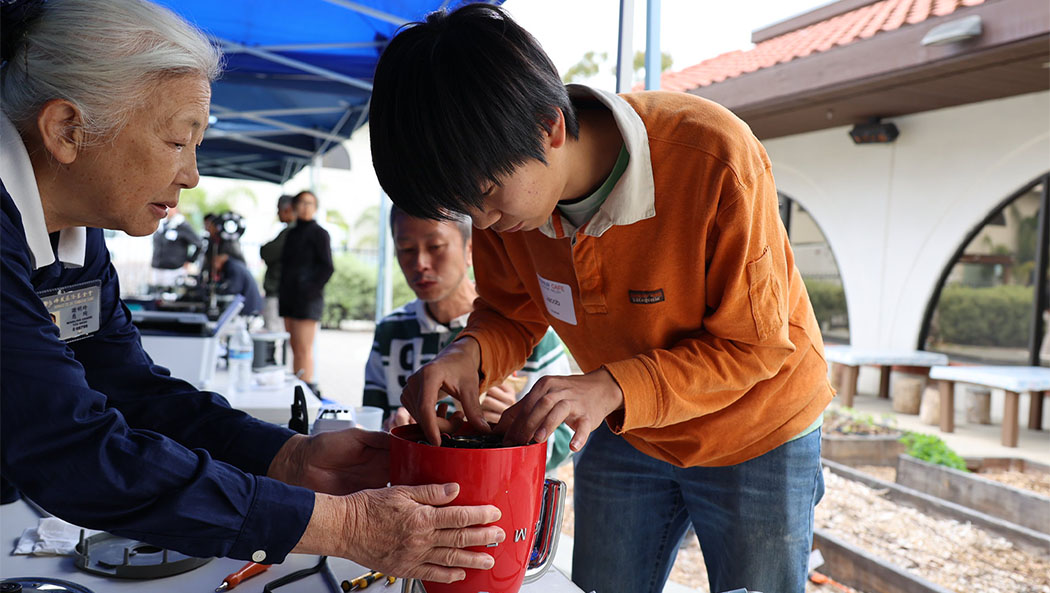
At another station, the father-son duo of David Chiu and his son Jacob Chiu also drew quite a crowd. David shared that Jacob has loved taking things apart since he was little. “When he was a kid, when he took things apart, he often couldn’t put them back together,” David said with a laugh. However, he never stopped his son. “After all, he was just taking apart things we didn’t need at home or that were already broken.” Jacob also admitted that when he takes things apart, it’s often not to fix them, but simply out of curiosity about the parts and how they’re built.
On the day of the activity, Jacob patiently repaired a water kettle. Mingling Chiang, the owner, explained that she had used the kettle for over a decade; since it was quite expensive when she bought it and had a beautiful design, she couldn’t bear to throw it away. She brought it along just to see if it could be fixed, but to her surprise, it was actually repaired. She said happily, “I’m truly so grateful!”
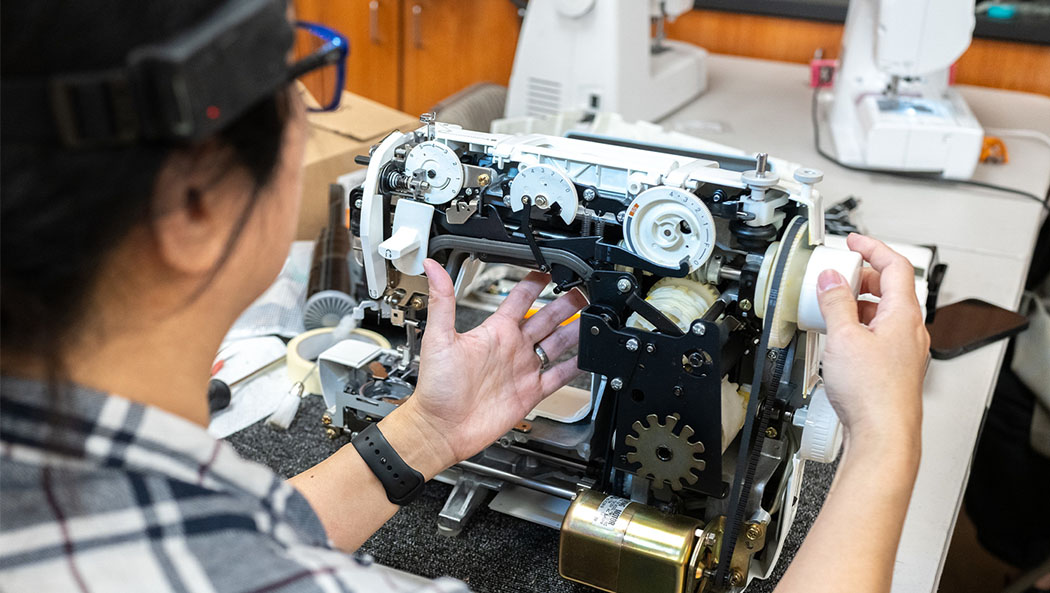
Another first-time volunteer, JJ Ku, worked on sewing machine maintenance. JJ is currently taking classes to learn how to repair sewing machines, and his instructor recommended that he participate in activities like the Repair Café to gain experience. However, he also admitted that he doesn’t yet have enough confidence to repair items for others, so this time he was mainly responsible for maintenance and cleaning, both important jobs. After being cleaned and lubricated, many sewing machines were able to run smoothly again.
The Repair Café has never been just about experts fixing things. It’s more like a learning platform. Everyone can start from what they are capable of and accumulate experience bit by bit.
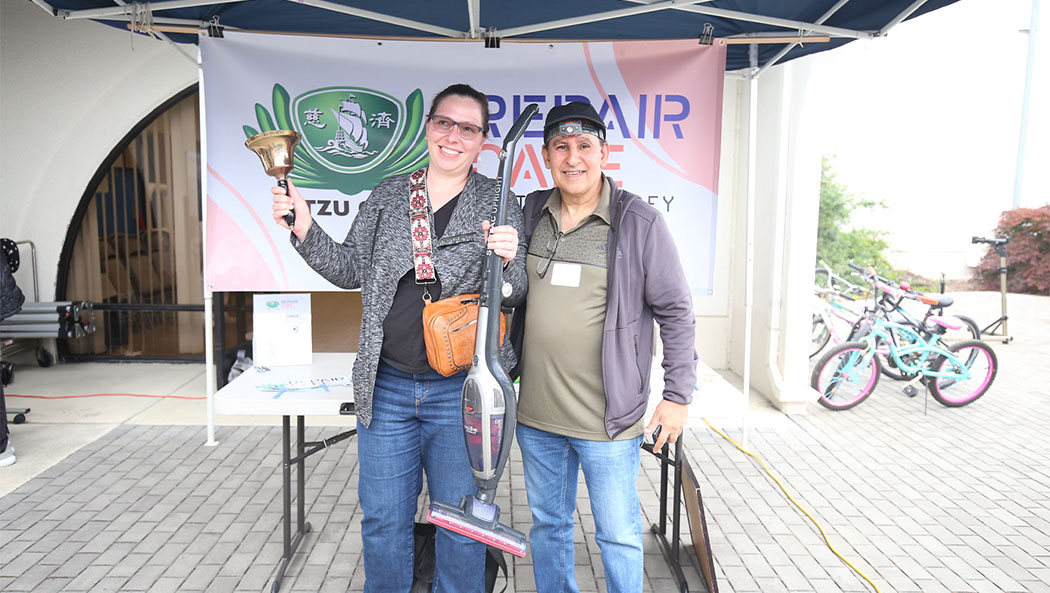
Victoria Walles learned about the activity after seeing a flyer for the Repair Café at her local library. She made a special trip to bring her vacuum cleaner for repair. She explained that the vacuum cleaner is an essential tool used daily in her house. When asked why she didn’t simply buy a new one, she replied frankly, “Prices are really high now, and life isn’t easy. If it can be repaired and used again, that’s definitely the best option.”
This simple statement actually captures the reality many families are facing today. The Repair Café isn’t just about environmental protection; it also helps many people practically reduce their living expenses.
Lucy Shi, who brought a bicycle for repair, explained that while the tires were worn out, the bike was still in good condition. The bike has been accompanying her daughter since childhood; she couldn’t bear to throw it away. “I don’t know how to fix it myself, so I’ve been hoping to find someone who could help repair it someday.” She originally thought it would just be a tire replacement, but to her surprise, the repair technician not only changed the tire but also adjusted the brakes and derailleur, essentially giving the entire bike a full maintenance job.
When asked about her views on the Repair Café and the concept of environmental protection, she said, “I think this is wonderful. We need to protect nature, avoid waste, and give old things a second life.”
Community Solidarity and Sustainable Living
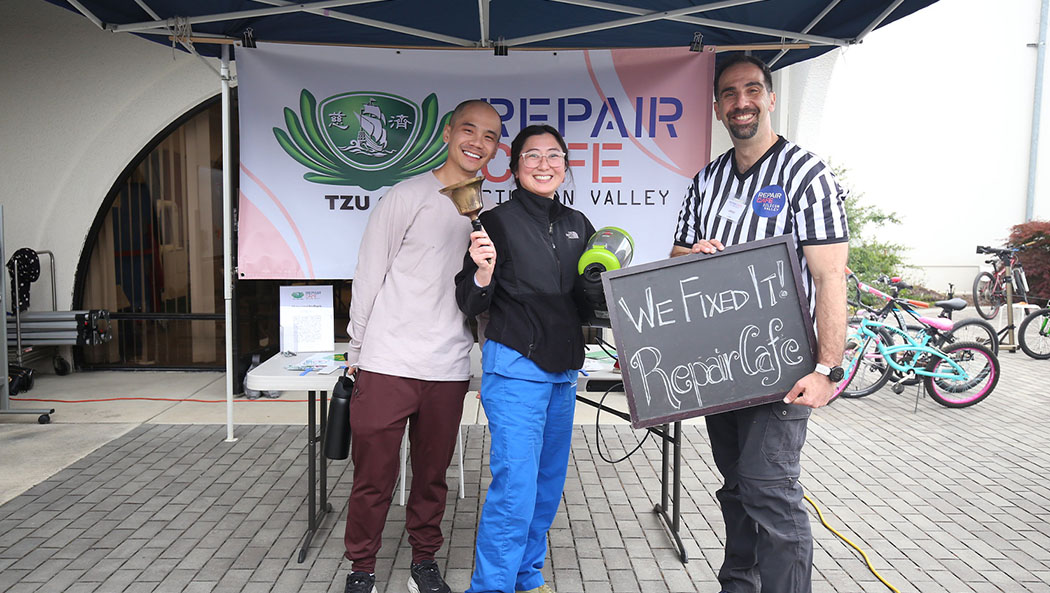
Jon Fralich, one of the principal coordinators of Repair Café Silicon Valley, shared his personal journey of dedicating himself to repair work over the years.
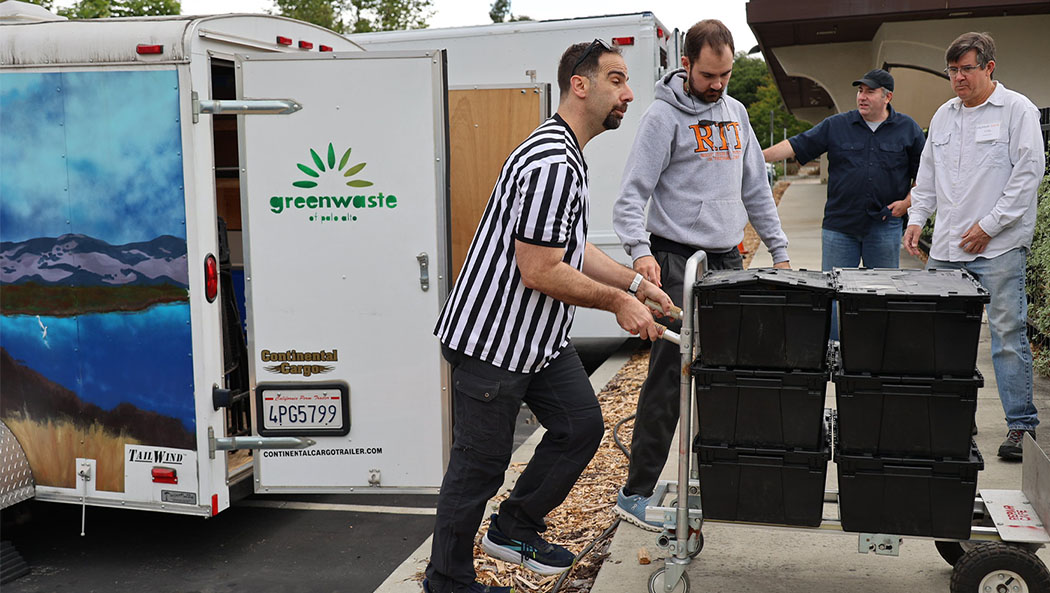
Jon began participating in Repair Café in 2018. He described repairing items as solving a puzzle. “First, you have to identify the problem, figure out how to take it apart, and then think about how to fix it. Sometimes, the biggest challenge is finding parts that are no longer in production.” In addition to repair work, Jon is also responsible for coordinating venues, organizing activities, and carrying tools and supplies.
He laughed as he said that one of his key tasks is driving a trailer around to support events. So far this year, there have been ten activities, with another twenty or thirty activities scheduled. When talking about the Repair Café’s collaboration with Tzu Chi, John expressed particular appreciation: “Tzu Chi volunteers are truly highly organized. We can focus on the repairs, while they handle the entire activity planning flawlessly.”
Jesse Kornblum, another person responsible for Repair Café Silicon Valley, shared why he got involved with the initiative. Jesse said he was the kind of kid who loved taking things apart from a young age. “It’s just that back then, I often couldn’t put things back together after taking them apart,” he said with a laugh. Later, he realized that while he wasn’t the most skilled at repairs, he excelled at organization and coordination, so he began focusing on activity planning and management.
According to Jesse, the purpose of the Repair Café goes beyond simply fixing items. “We want to educate people, to let them know how to maintain their belongings and how to repair them, rather than just throwing things away when they stop working.”
When talking about the Repair Café’s collaboration with Tzu Chi, he specifically praised Tzu Chi as one of the most organized and friendly organizations they had ever worked with. “When we arrived here, all the supplies were ready. Some helped set up the venue, others assisted with coordination, and there was even a delicious lunch,” he said with a smile. “It’s truly been a wonderful partnership.”
Jesse also shared that one of the greatest rewards the Repair Café has brought him is a sense of community solidarity. Through these activities, he has met people from many different places and witnessed the most sincere spirit of mutual aid between people. He said that every time he successfully repairs an item, two feelings arise in his heart simultaneously. One is pride. The other is a sense of relief. “It’s a feeling like, ‘Wow, I really fixed it!’” Even after many years, that joy has not faded.
What the Repair Café truly repairs is never just an item. It restores people’s attitude toward life. When people are willing to take the time to repair instead of simply throwing things away; when they’re willing to share their skills rather than hoard their knowledge; when they’re willing to help one another instead of just chasing convenience and efficiency, the world will slowly begin to change. And that is precisely what makes the Repair Café so moving.
Jesse Kornblum, Director of Repair Café Silicon Valley
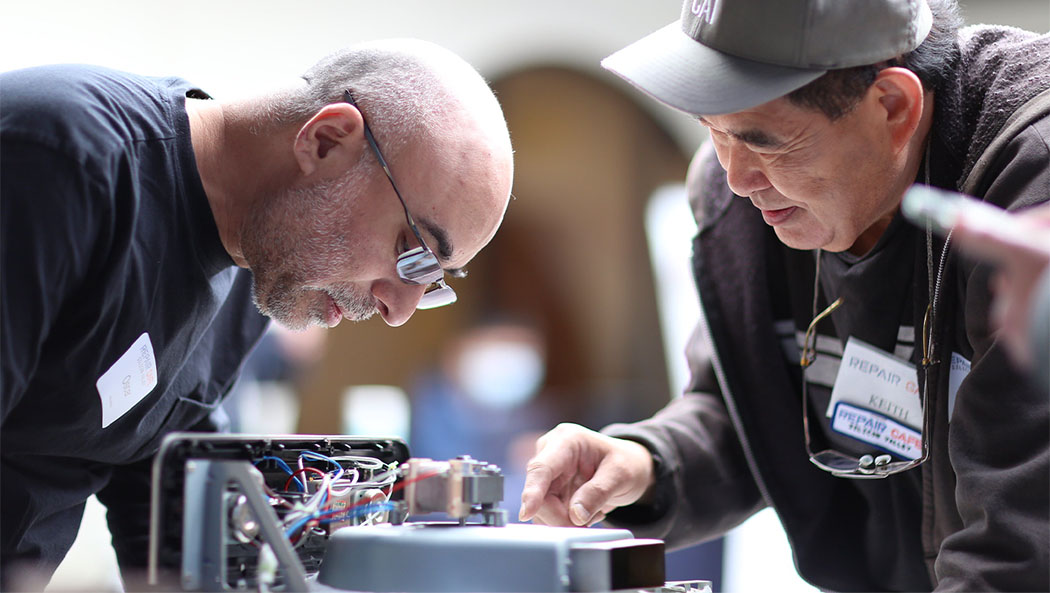
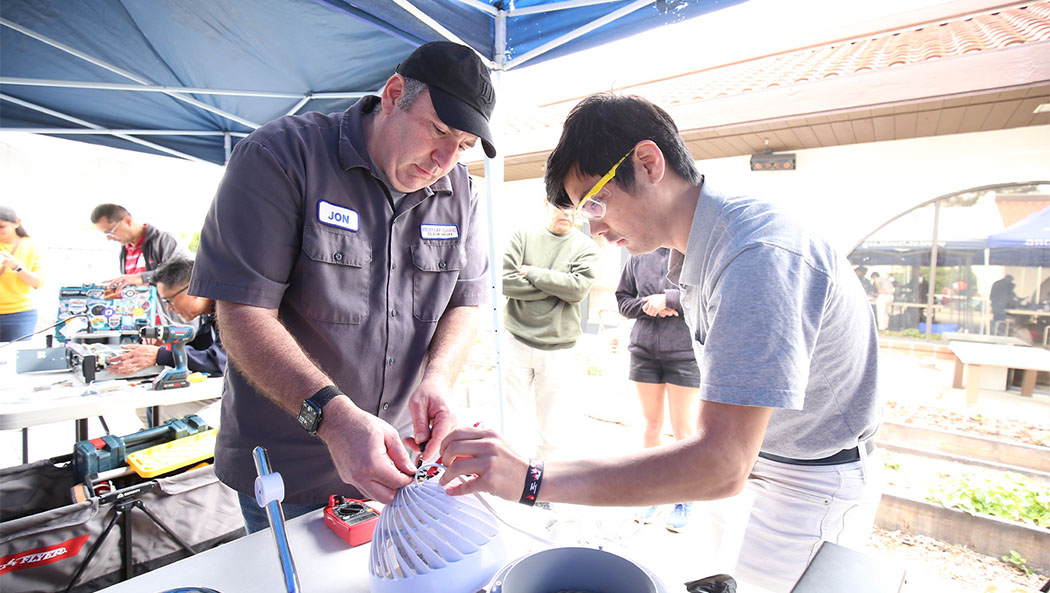
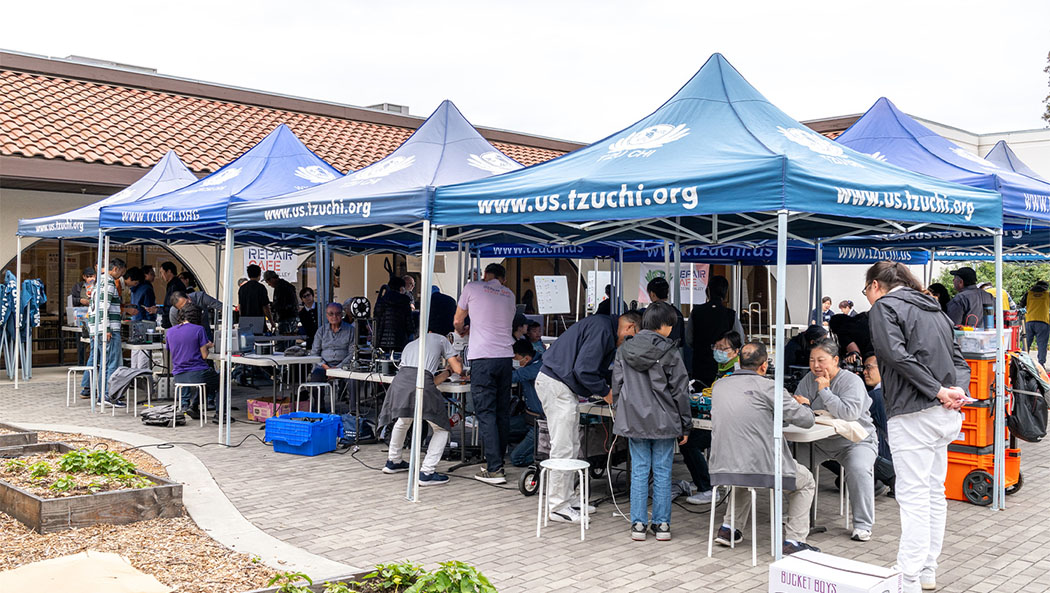
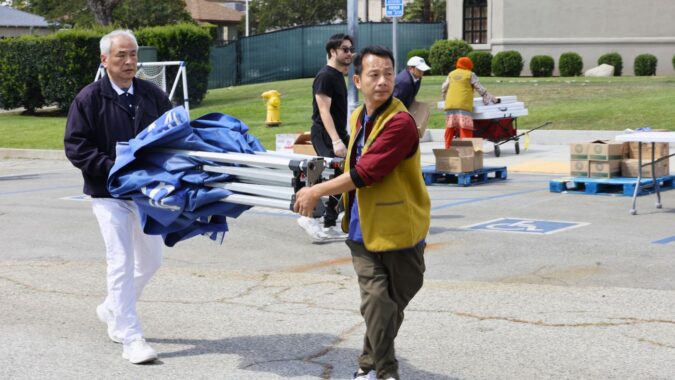
As the activity drew to a close, the setting sun slowly bathed the venue. Repair volunteers began packing up their tools, other volunteers tidied the site, and many residents left with their newly repaired items and beaming smiles. Some rode bicycles that were now running smoothly again, some carried home appliances that were finally working once more, while others went home with a new perspective that when things stop working, they don’t necessarily have to be thrown away, and that everyone can do their part for the environment by learning to repair.
The Repair Café offers more than just a one-day activity; it represents a shift in lifestyle. As more and more people choose to cherish resources, extend the life of their belongings, share knowledge, and help one another, this cycle of kindness will spread throughout the community. Perhaps the impact of a single repaired item is small, but when many people work together, they can bring about real change for our planet.